Land of Palms and Clay
Ride details
Price
1100 €
Level
advanced/intermediate
Group
max
12
riders
Available dates
Additional costs
flights, insurance, lunches on the way to Zagora and in Marrakech, entrance fees in Marrakech (optional)
Day 1 – Marrakech
You land in Marrakech – one of the most intense cities in Morocco. From the first moment, everything happens at once: carpets, spices, leather, endless stalls, coffee, sweets, voices, movement. Narrow streets, street food, piles of fruit, rows of olives.
Everything circles around Jemaa el-Fna. That’s where your time in Morocco begins.
Today is yours. Walk, wander, get lost a bit. No plan, no rush. If you want to see a few of the well-known spots, you can visit Majorelle Garden, Bahia Palace, the Saadian Tombs, or Le Jardin Secret. Or just stay in the medina and let the city pull you in.
In the evening, we return to the riad. Dinner, a bit of quiet after the day, and the first moment to settle into this place.
Day 2 – Crossing the Atlas south
We head south, into the Atlas Mountains. A day on the road, with the landscape constantly shifting.
We pass villages with blooming almond trees, green oases after winter rains, and peaks still capped with snow. In the mountains, it can still feel like winter – clouds low, air getting colder, the road winding higher and higher.
Then it changes. We enter the Anti-Atlas – more raw, almost lunar.
We stop in Ouarzazate, often called the Moroccan Hollywood. Films and series have been made here for years, and the surroundings might feel familiar from the screen.
Further south, the green returns. Vast palm groves appear — date palms, among the oldest cultivated trees in the world. And finally, we reach Zagora — the last larger town before the desert. This is where we run our stable in the winter season.
We stay in a hotel – traditional, Moroccan, but very different from a riad in Marrakech.
The south of Morocco feels like another world.
Day 3 – Finally on horseback
You’ve been waiting for this.
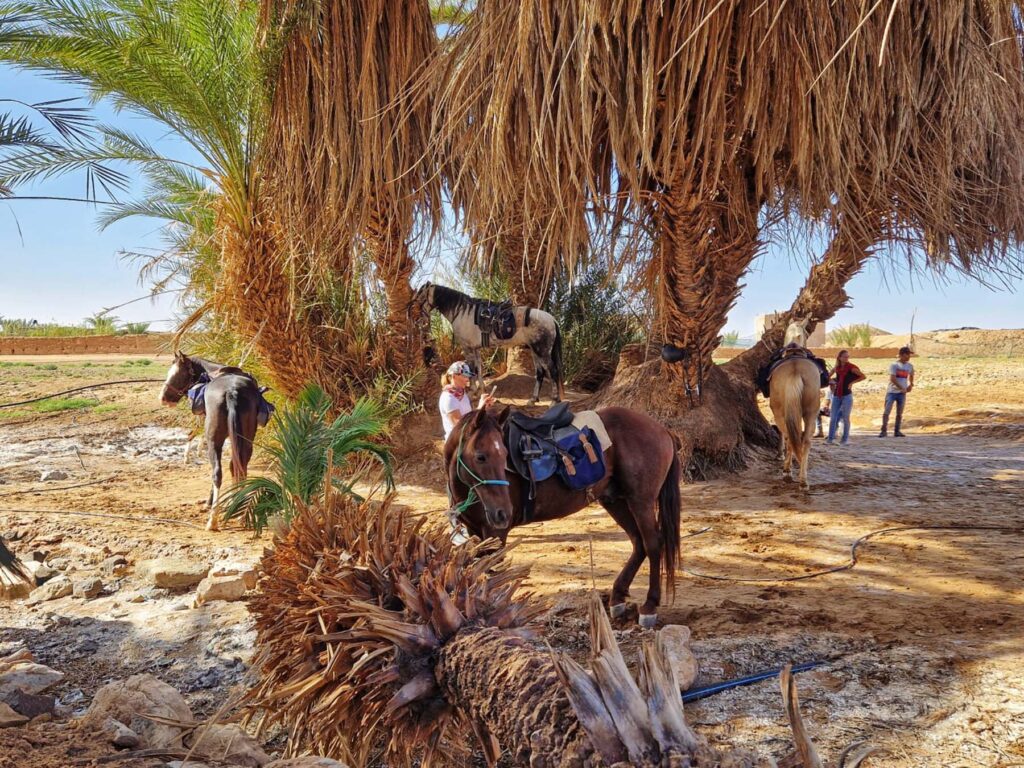
We head to the stable — we’ve been there since morning. Saddling horses, packing the camp gear, preparing lunch, loading the saddlebags. Today, your job is simple: get in the saddle, meet your horse, find a rhythm together. The rest – grooming, saddling, the technical side – comes later.
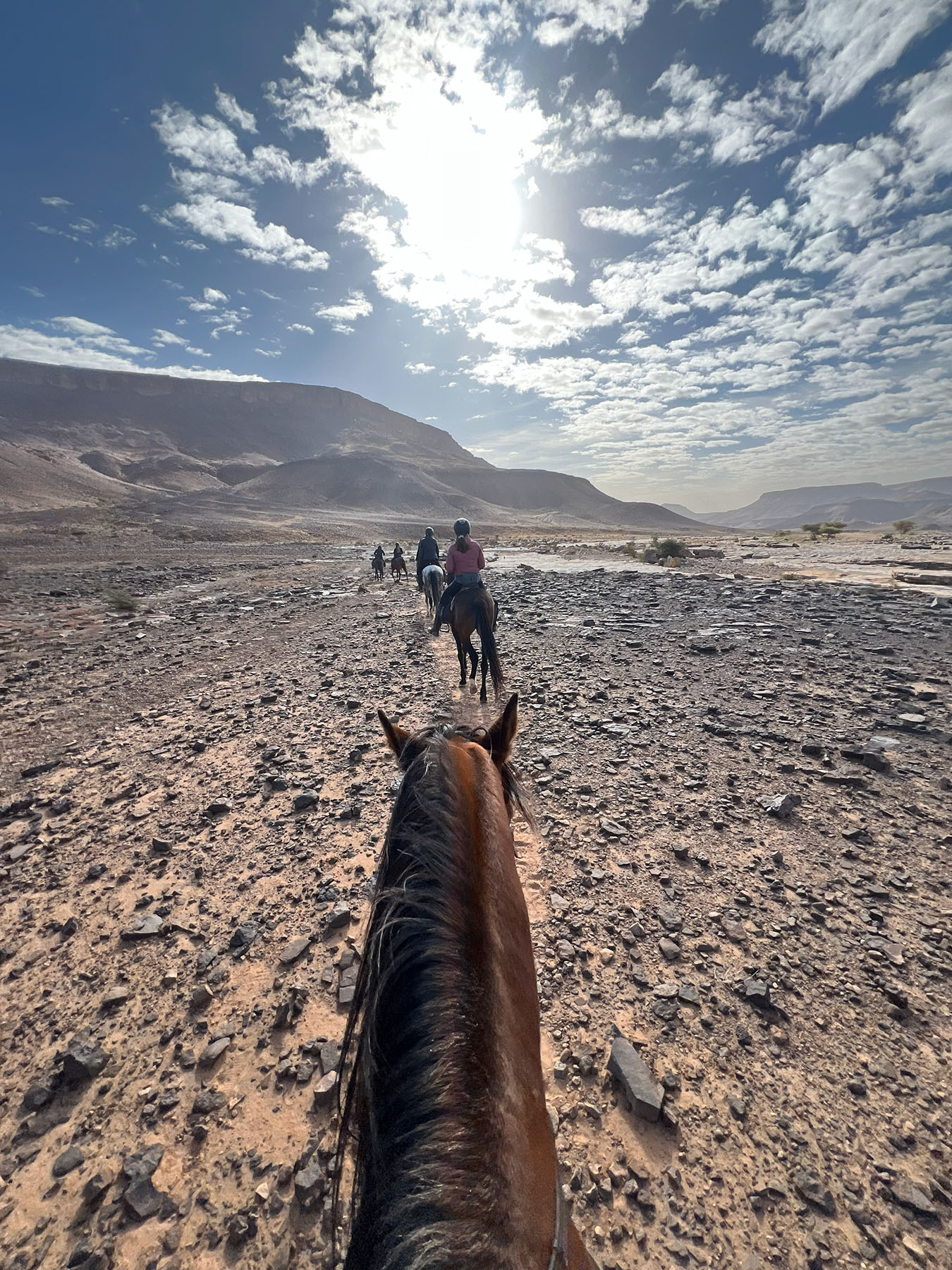
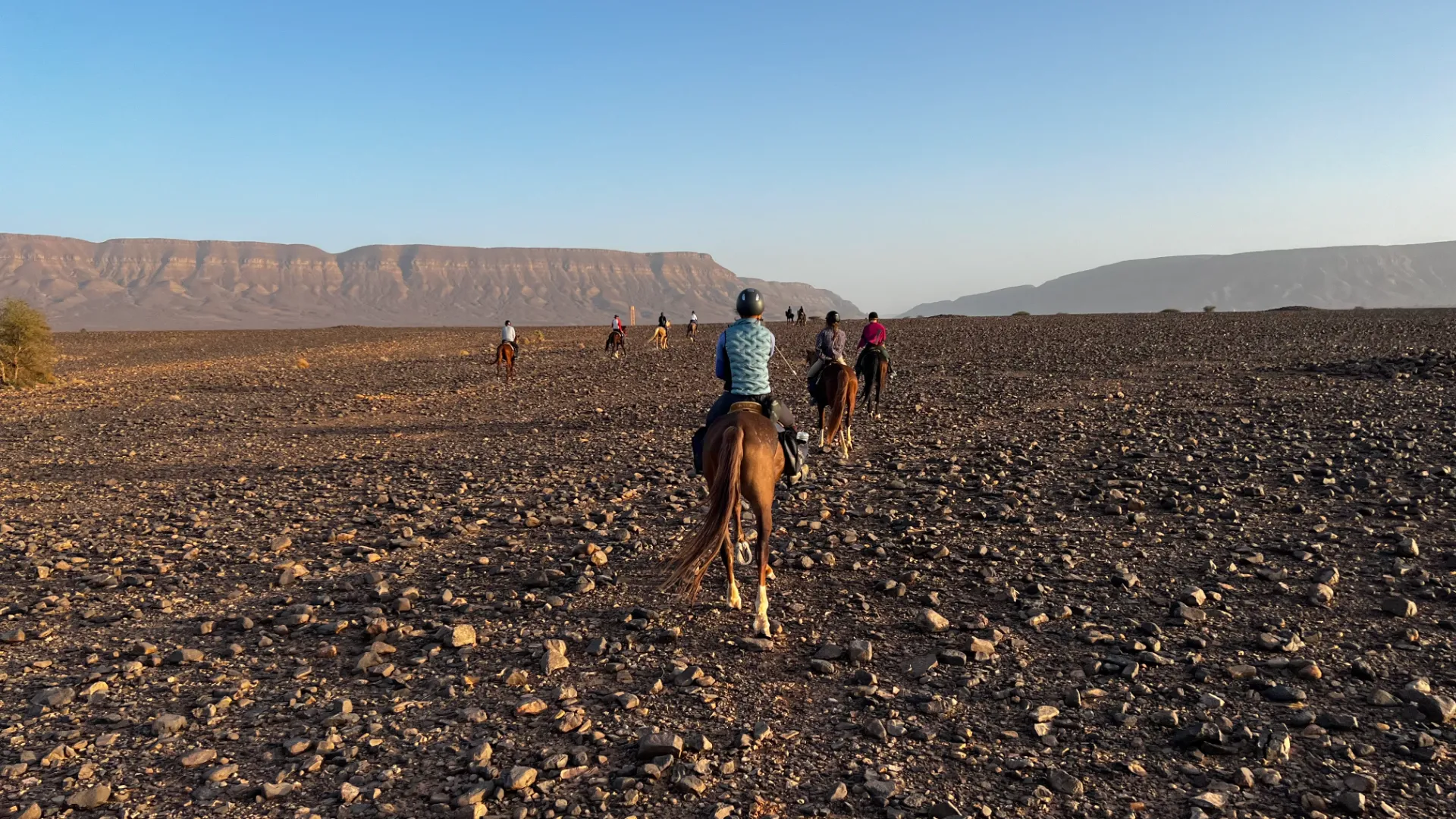
We ride out. First through the hills around Zagora, then we cross the Draa River. The landscape opens up – we enter the hamada. In the distance, the Bani mountains stretch across the horizon, the longest range in Morocco.
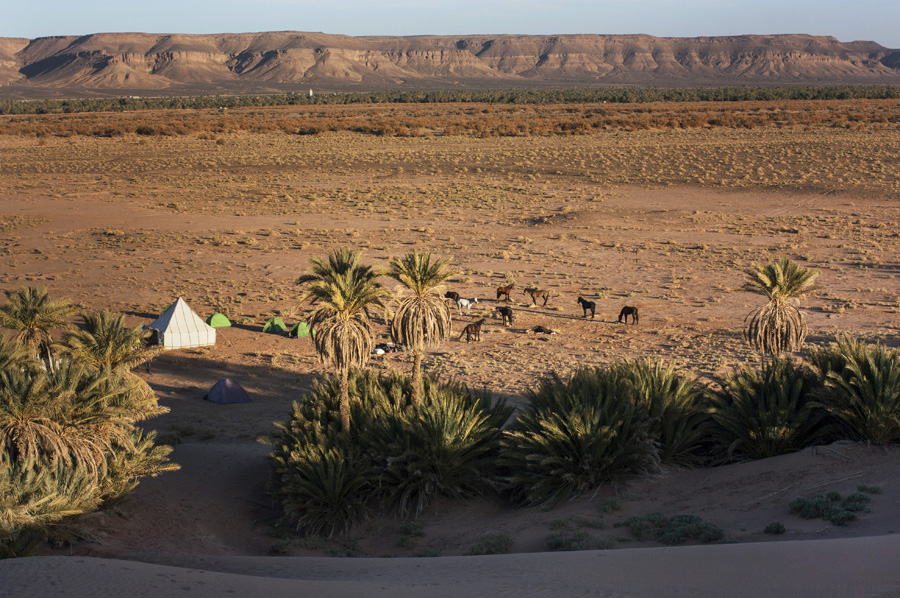
Another river, another village, a few good gallops – and we reach a palm oasis at the foot of the mountains. That’s where we camp.
Then it slows down.
Day 4 – Towards the desert
We cross the Draa again. In some places overgrown, in others unexpectedly deep, and sometimes already dry. We ride straight through it.
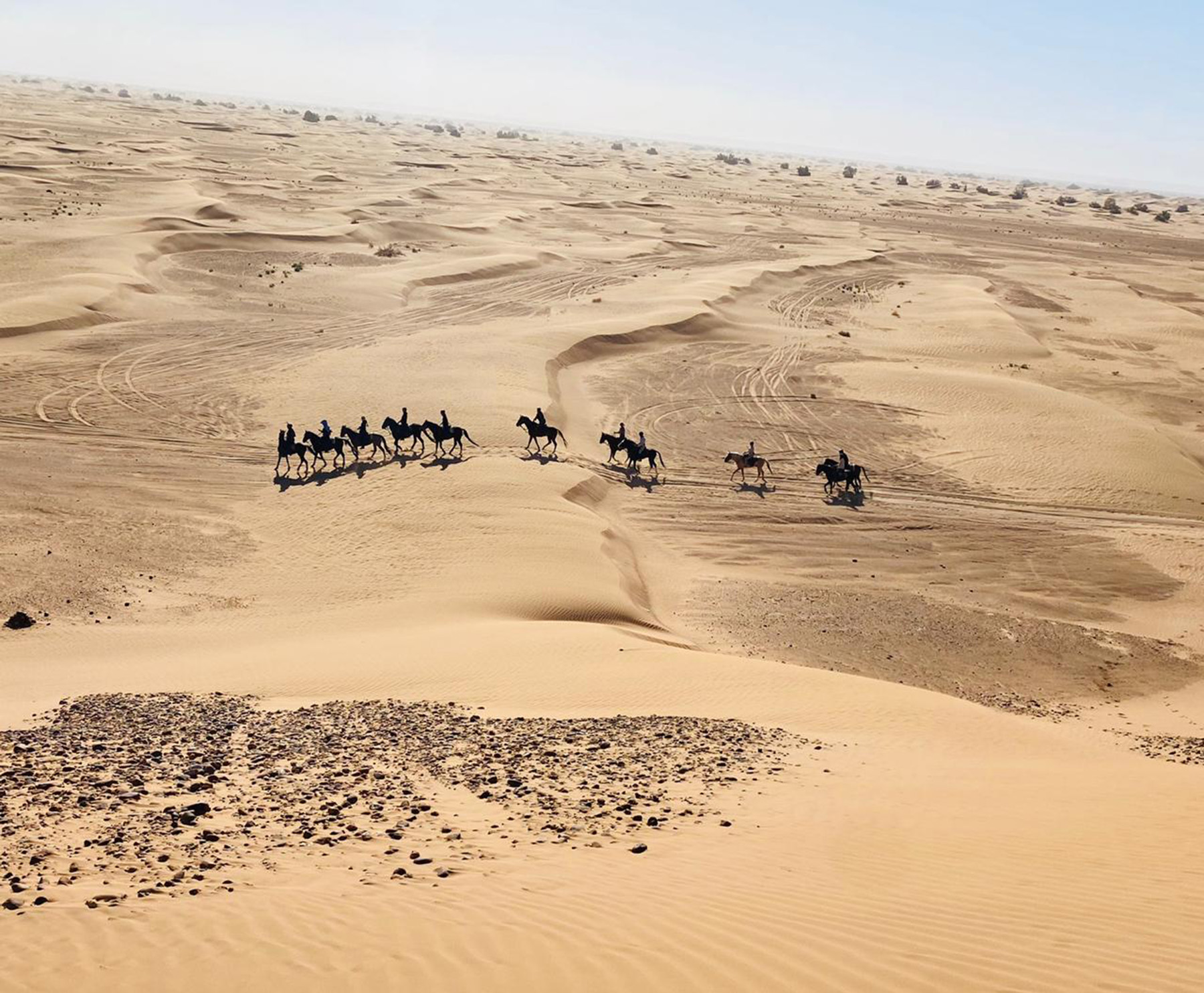
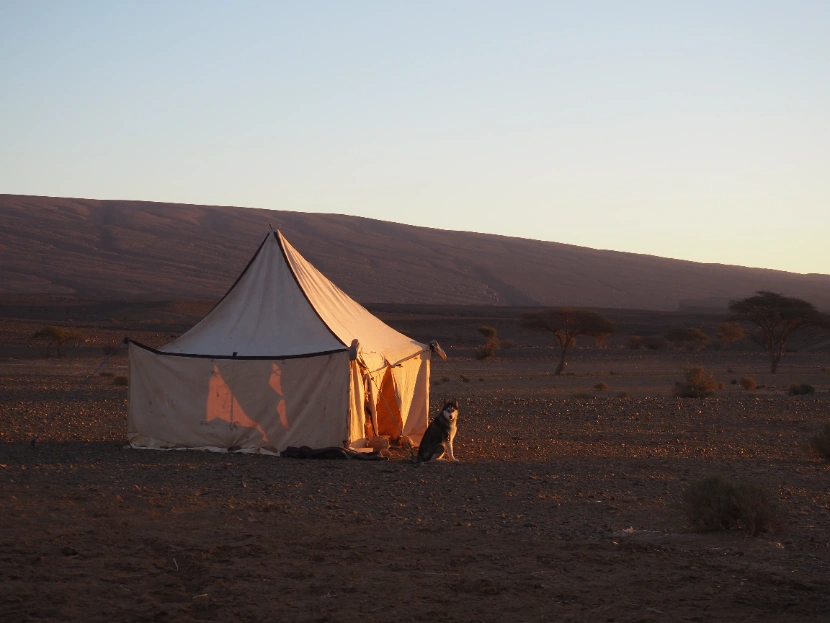
South is pulling us in. The Sahara is ahead. The official desert line is still in front of us, but the change is already there. And one thing matters – the desert isn’t empty. It’s not just sand. It’s mountains, rock formations, sparse vegetation, wide open space, dry riverbeds and green oases.
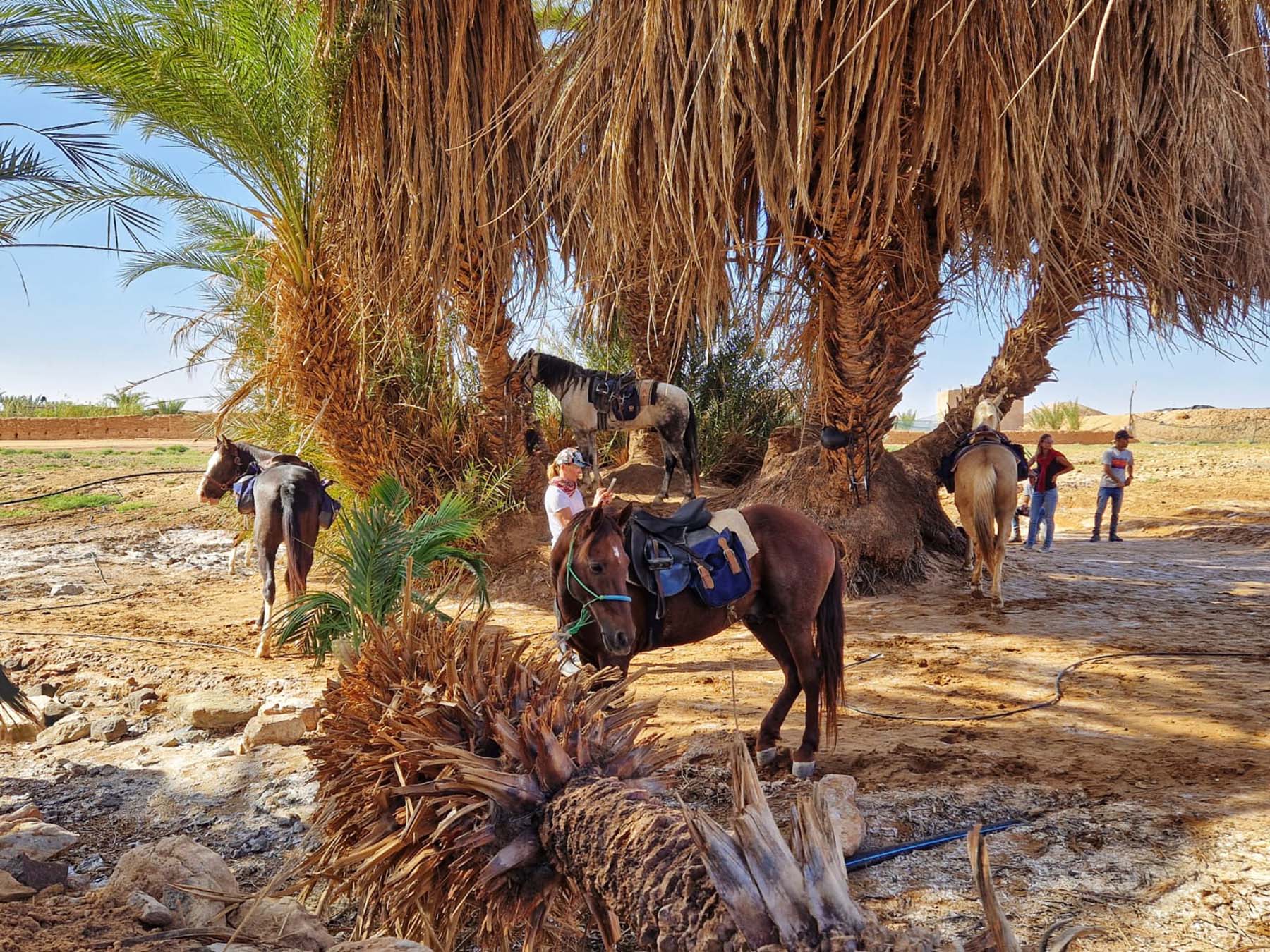
We stop for lunch among fields, patches of green, and palm trees – one of those places where life still holds on to the land.
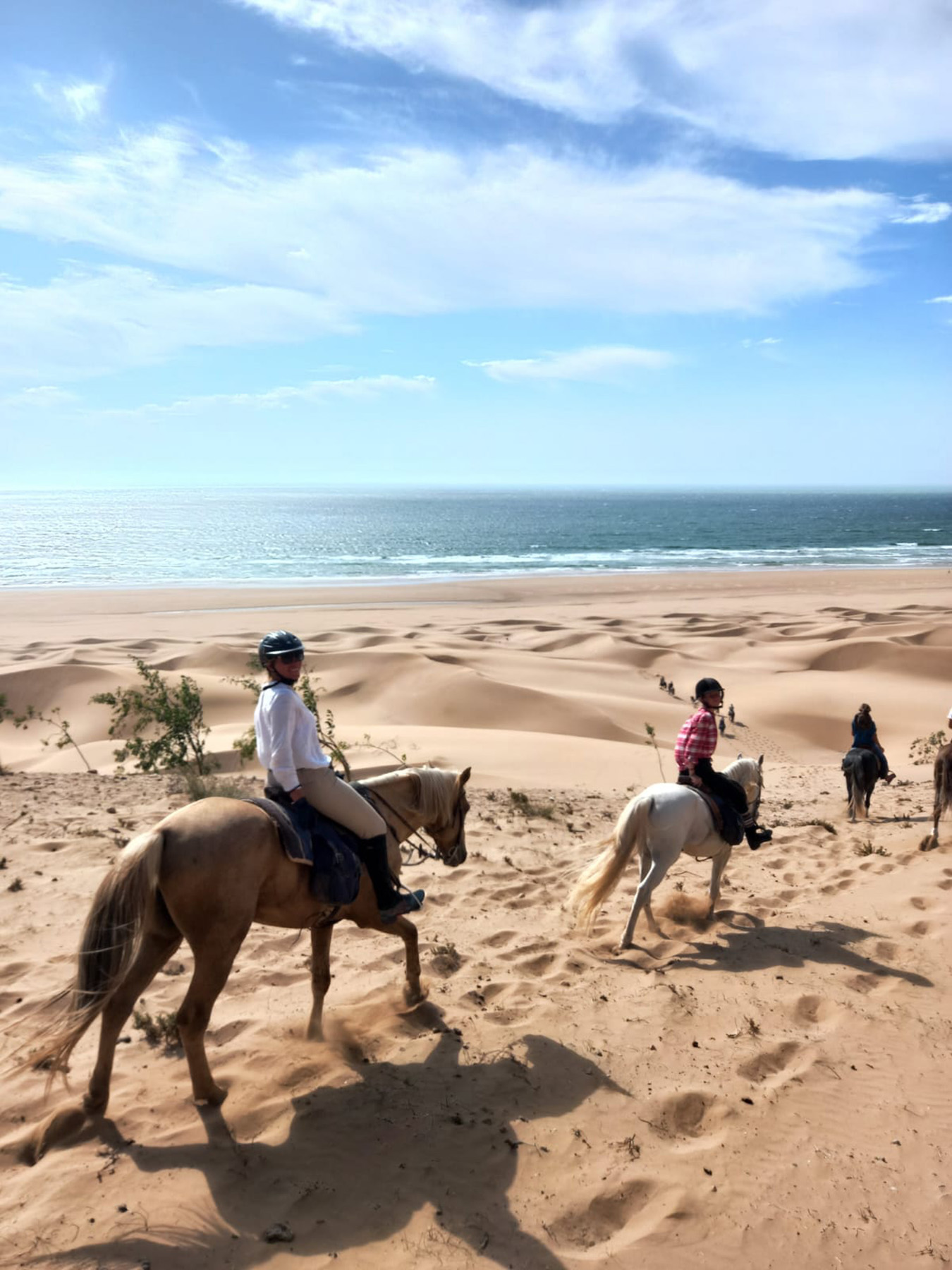
In the afternoon, the first dunes appear. That’s when it really starts.
We camp between sand “mountains”, with the sunset behind them.
And even if everyone is tired after the day – you have to climb them.
From the top, it’s a completely different world.
Day 5 – Gateway to the Sahara
We start in the dunes. Soft, sandy “hills” – not the highest yet, but already different from everything before.
Beyond them, the landscape shifts again. Abandoned gardens, dried out from lack of water. Wide stretches of cracked earth. Donkeys grazing here and there. Silence, dust, light.
Mountains appear again in the distance. This is the gateway to the Sahara. Beyond them, the desert truly begins.
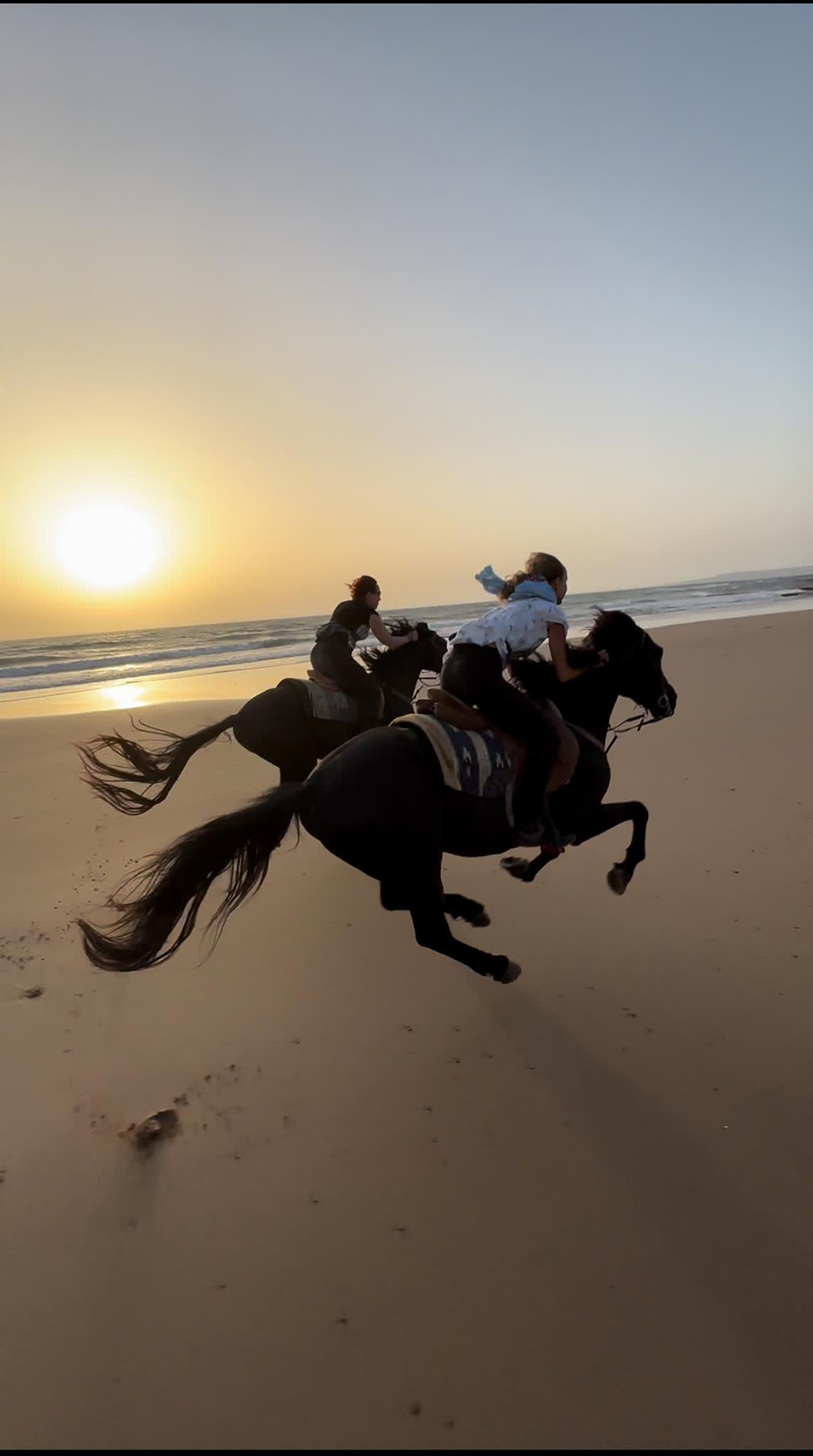
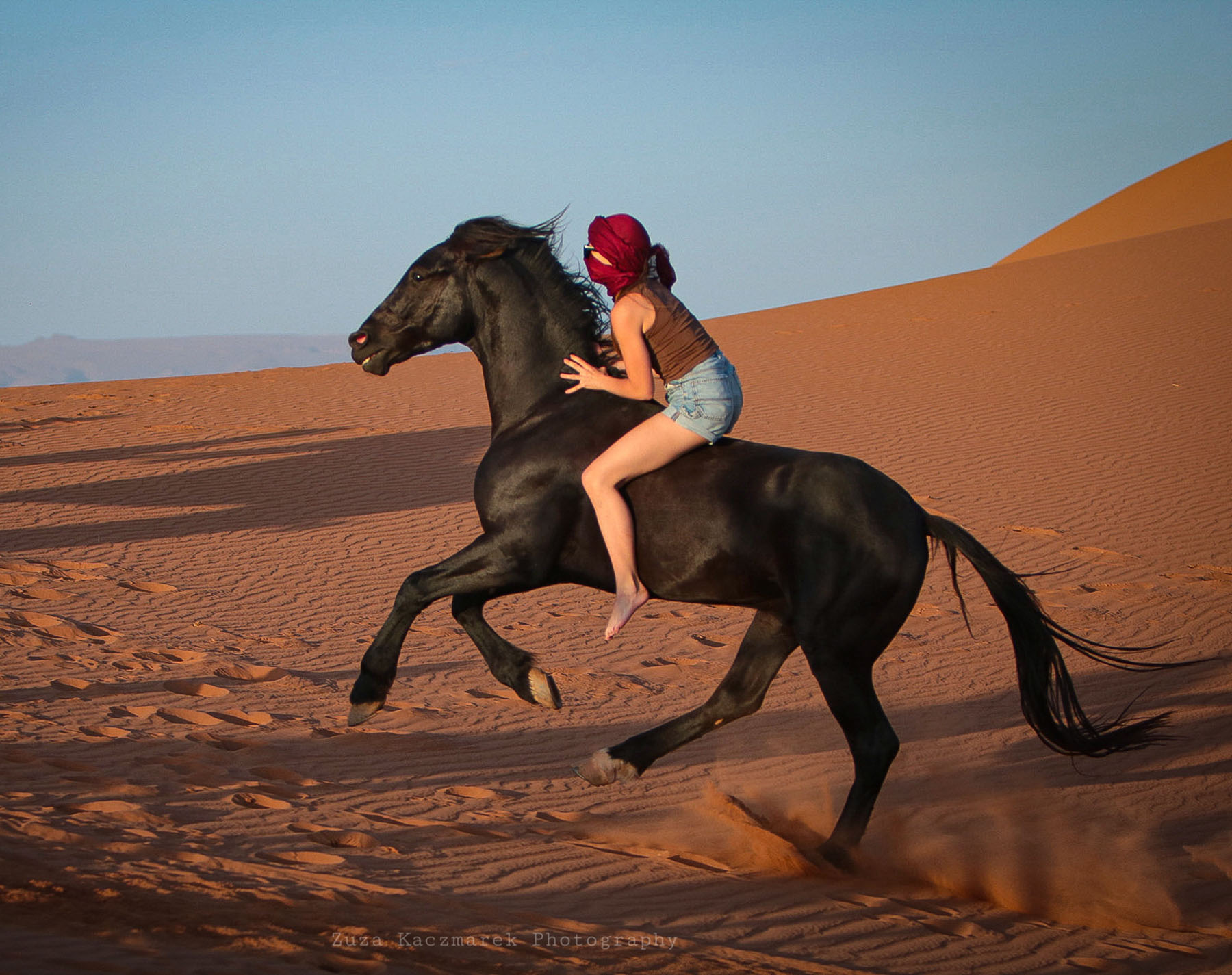
And this is where we let the horses go. Long gallops on firm ground. Speed you feel through your whole body. Dust rising behind us. Space opening in every direction.
We leave nothing but hoofprints.
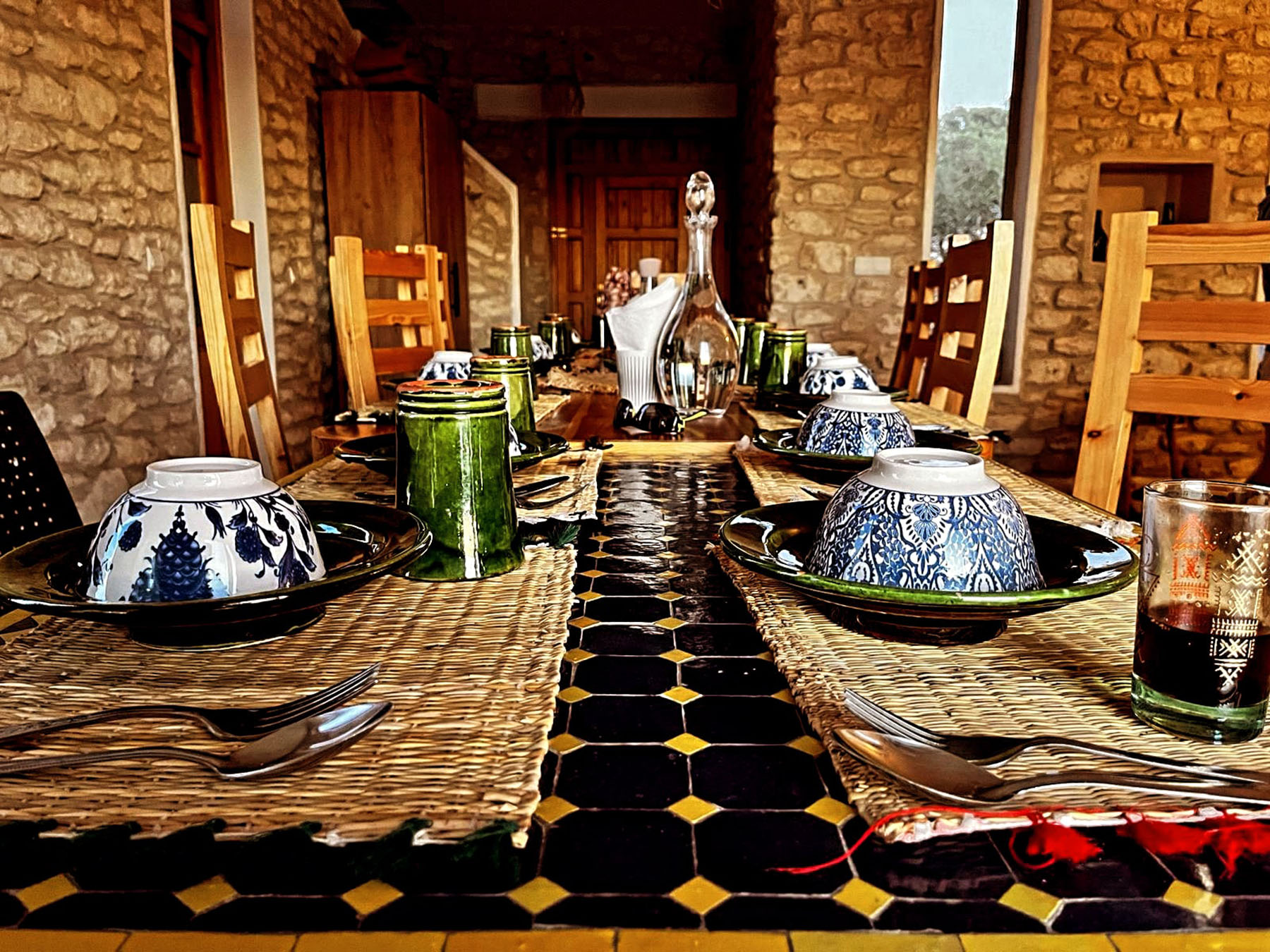
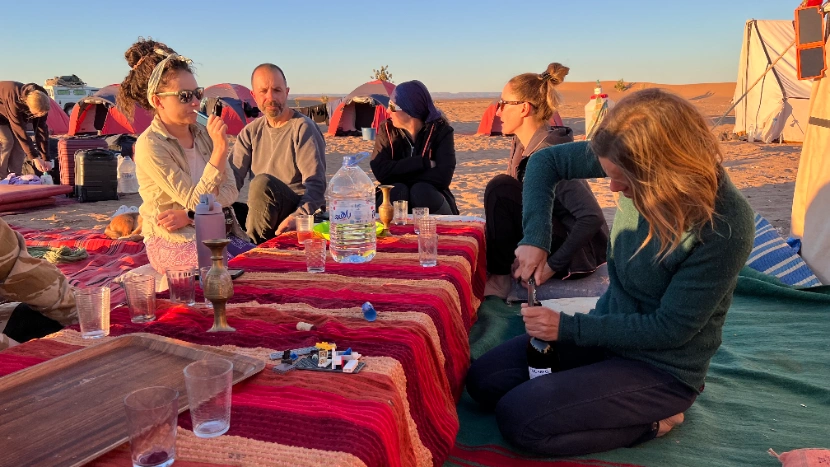
We reach camp – and it’s different from anything before. Carpets, large tents, real beds in the middle of the desert. Cushions, candles, Moroccan ceramics, a shower, hot water.
Luxury, right in the sand.
Day 6 – Staying on the sand
We stay in our desert camp for one more day. No packing, no rush.
If you make it for sunrise, you’ll see the desert waking up from the back of a camel. A slow ride, soft movement, a completely different rhythm than horseback.
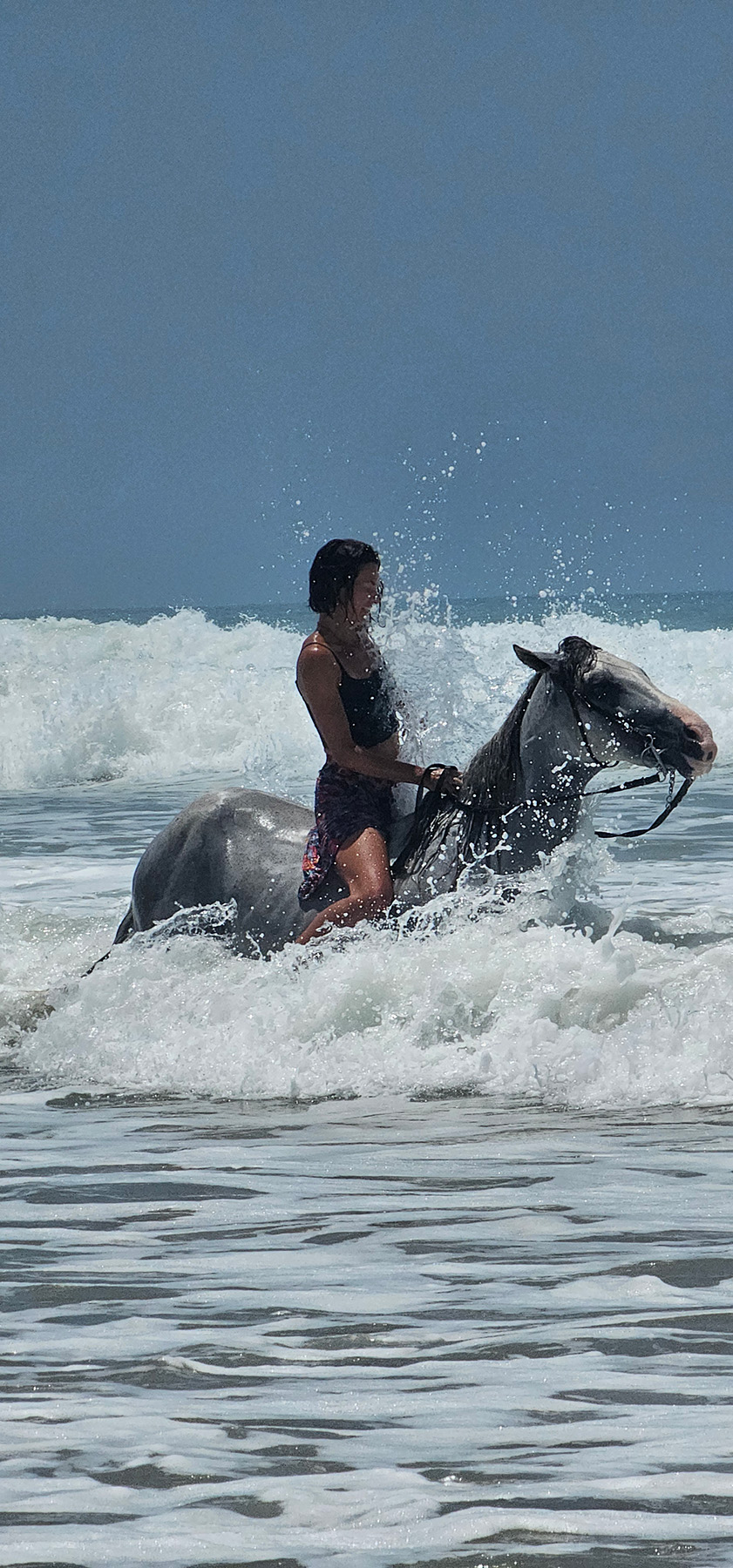
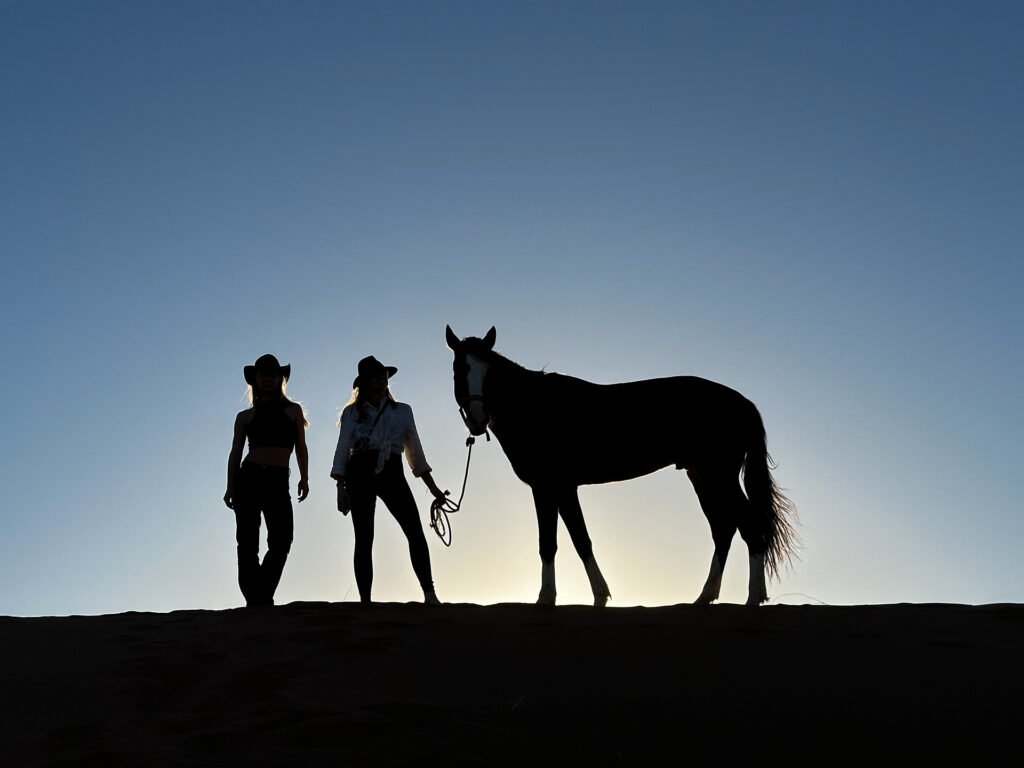
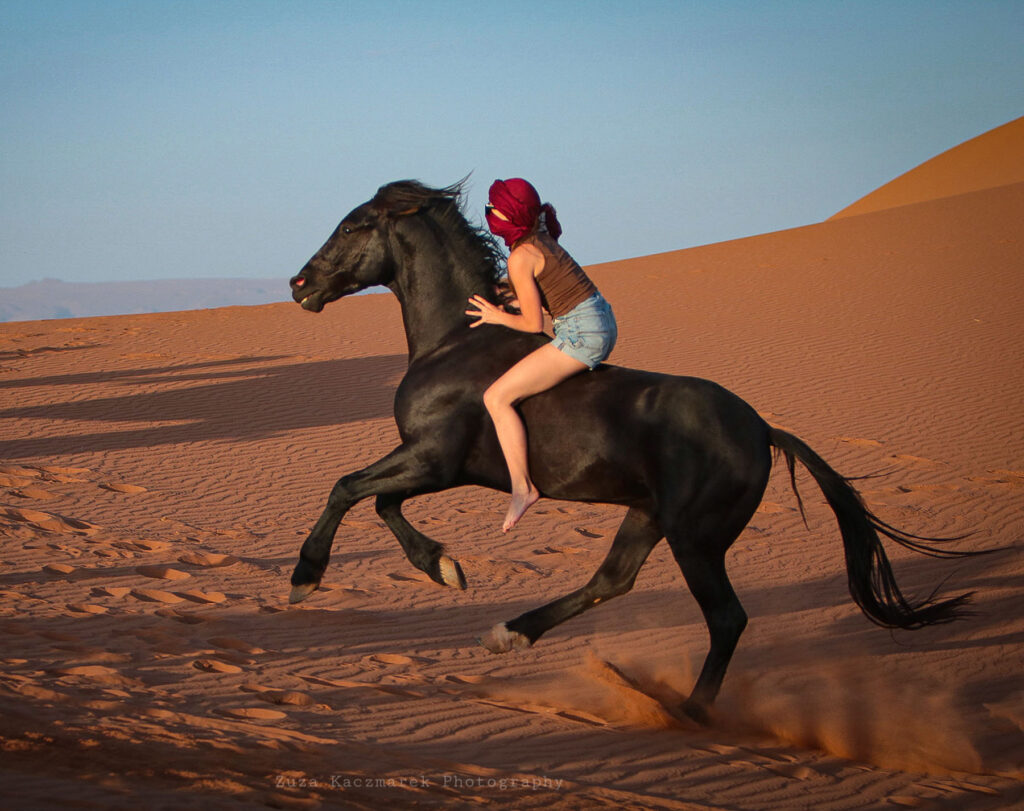
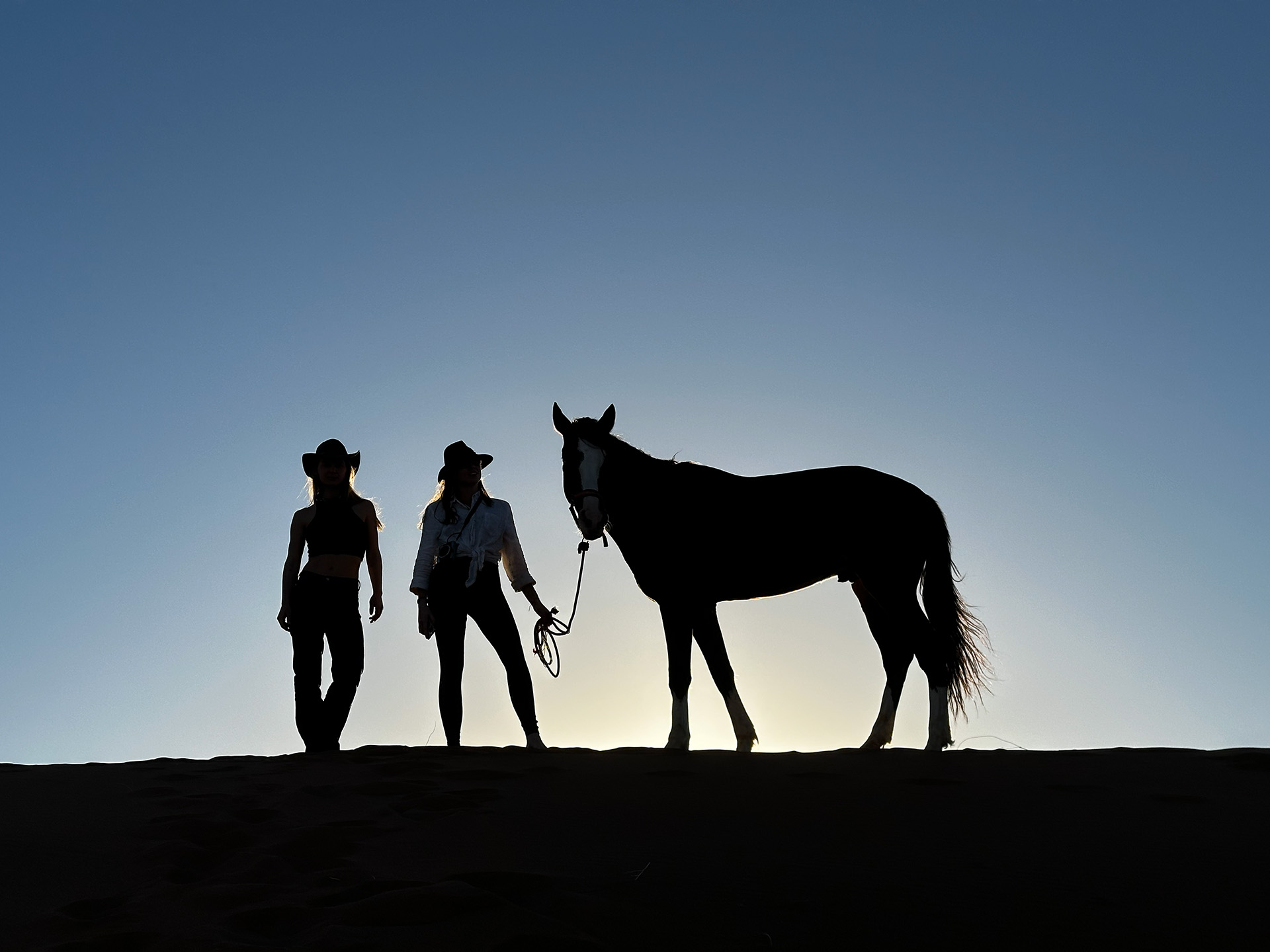
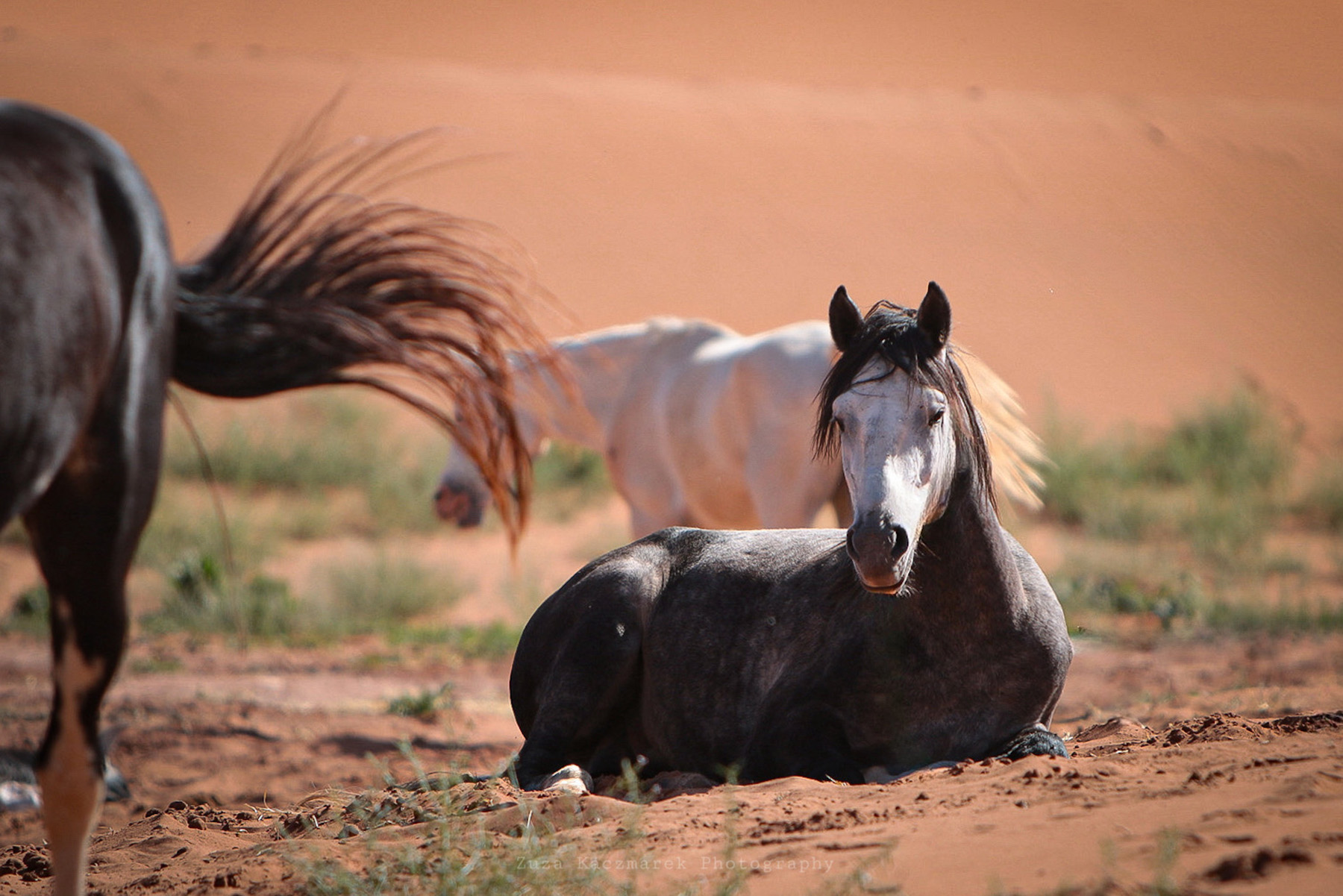
The rest of the day is about being here. Photos with the horses, bareback riding, time with them without tack, without a plan.
We also visit a ksar – a fortified village that’s still inhabited. One of the last before the open desert. You’ll see how people lived – and still live – in these conditions: clay walls, shade, small courtyards, thick structures keeping the heat out.
A slower day.
Day 7 – Towards the mountains
Back in the saddle. Dunes, tamarisk trees, open space. Plenty of room for gallops – soft sand mixed with firmer ground.
If we’re lucky, we might spot gazelles or desert foxes. More vegetation starts to appear – grasses, acacias – the landscape slowly becomes more varied.
The mountains are our reference point. Even when the trails disappear in the sand, they give direction.
We camp among wide acacia trees.
This is one of those places where you might see ostriches – curious, fast, and completely unbothered by people.
Day 8 – Mountain day
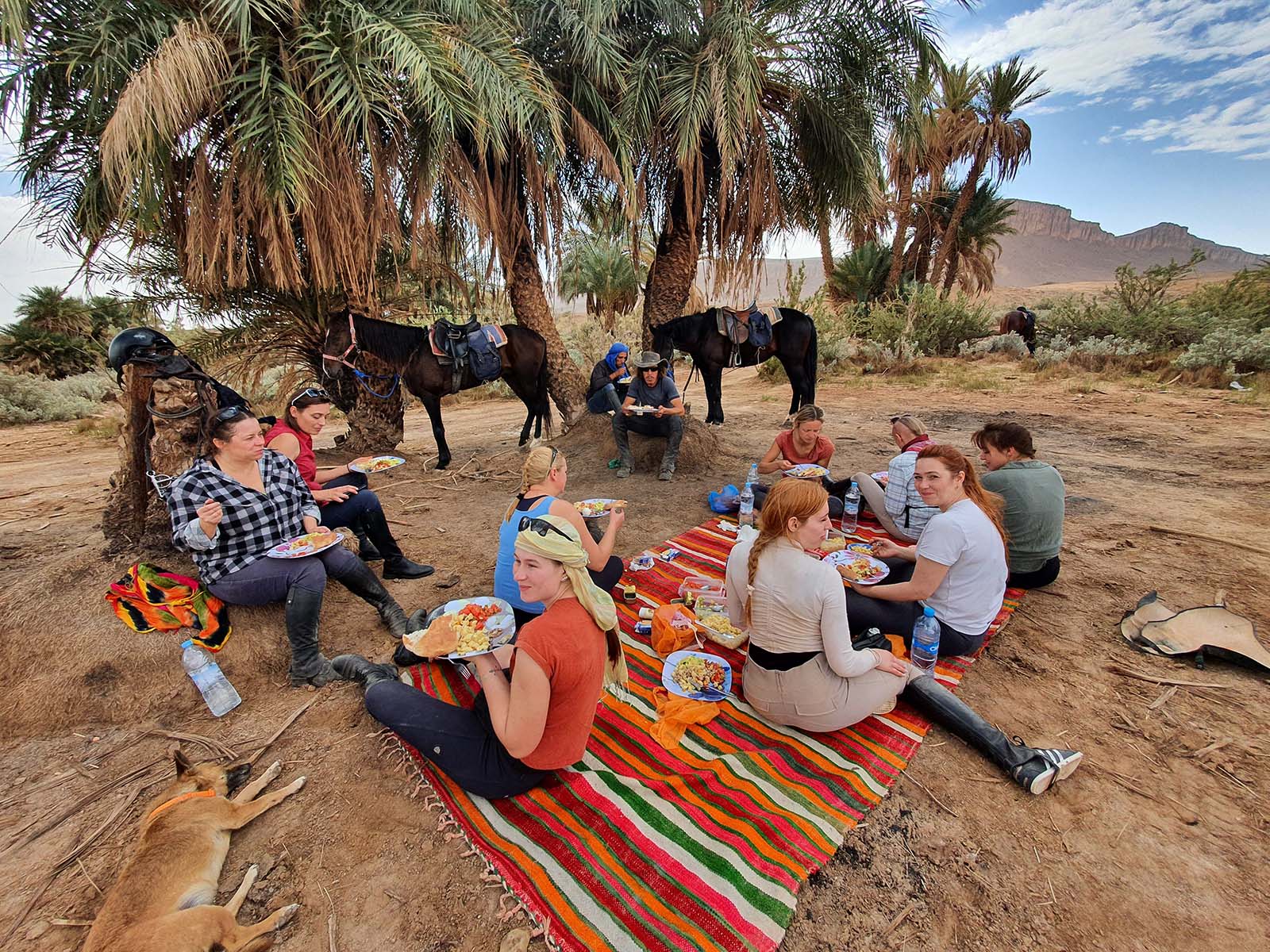
Today is all about the mountains. We ride along the range, across hamada and rocky ground. We cross a pass, and stop for lunch under tamarisk trees.
This is a place where Berber women with children often come to meet us. Sometimes they bring small handmade things to sell. Simple, real – worth stopping for a moment and supporting them.
After lunch, we head back into the mountains. This is a proper mountain day. There’s climbing – in a few places we get off and lead the horses. They move steady and sure, step by step over rocks and up the slopes.
The reward comes at the end. From the top, the plains open up below. And once we descend – a long gallop, mountains behind us, sunset in front. We gallop into camp.
Last night in the desert. Stars above, fire, wind, silence. Sometimes the moon rises huge and orange, spilling light over everything. Raw nature, as it is.
Day 9 – Goodbye to the horses
Last day with your horse. After six days together, you know each other. He’ve carried you through this landscape – in his way, at his pace.
Today is shorter, but more intense. We pick up the pace. More gallops – through narrow paths, small villages, turns, gardens on the edge of town. The landscape shifts again – people, houses, movement.
And the river again. It might be deep and fast, or just enough to wet the hooves. In Morocco, rivers can appear and disappear overnight.
In the afternoon, we say goodbye to the horses. Lunch, then back to town.
The rest of the day is different – slower in another way. Shops, a local hammam, maybe henna, rest. A soft landing after days in the saddle.
Day 10 – Back north
We head back. On the way, we stop at one of the most recognisable places in Morocco – Aït Ben Haddou.
Even if you’ve never been here, it feels familiar. It’s been used in countless films and series – places like this, preserved so well, are rare. No one knows exactly when it was built, but it was already there in the 11th century. Clay walls, narrow alleys, kasbahs stacked along the hillside – a landscape that looks unreal, but isn’t.
We walk through the village, get lost in the alleys, look out over the valley from above. A quiet stop after intense days out in the open.
In the evening, we return to Marrakech.
Day 11 – Return
End of the journey. We take you to the airport in Marrakech.
One of those trips that stays with you.
Back home.
What to bring?
Basic first aid kit (painkillers, diarrhea medications, plasters, disinfectants)
Sunglasses
Sunscreen with SPF 50+
Sleeping bag – preferably with a comfort temperature around 0 C
Passport – valid for at least 3 months after your arrival in Morocco
Cash – euros are the easiest currency to exchange
Power bank – no electricity during parts of the trips
Headlamp – highly recommended
Clothes – warm layers for mornings, evenings and nights. Comfortable clothes that are easy to put on and take off while riding are best. A hat is also welcome on colder evenings
Rain jacket or waterproof layer
Cap or other sun protection for your head if you will not be riding with a helmet
Hand sanitising wipes