Towards the Atlantic
Ride details
Price
1100 €
Level
intermediate
Group
max
12
riders
Available dates
Additional costs
flights, hammam, insurance
Day 1 — Arrival and the First Glimpse of the Atlantic
Your journey begins in Agadir. From the airport, we head south along Morocco’s Atlantic coast. Gradually, the busy roads disappear, the landscape becomes wilder, and a small fishing village comes into view. This is where the adventure begins.
Our first night is spent in a simple house just a few steps from the beach. There are no distractions here—only the sound of the Atlantic, fresh sea air, and the feeling that everyday life is already far behind. Don’t expect a resort. This is a simple coastal house chosen for one reason: its extraordinary location. The wild beach, the Atlantic Ocean, and complete silence are the real luxury here.
The horses are nearby, quietly grazing as they wait for the days ahead.
We share our first dinner together, often beneath a sky full of stars. There is a hot shower, comfortable beds, and the excitement of knowing that tomorrow, we’ll finally set off on horseback.
Day 2 — Wild Atlantic and first ride out
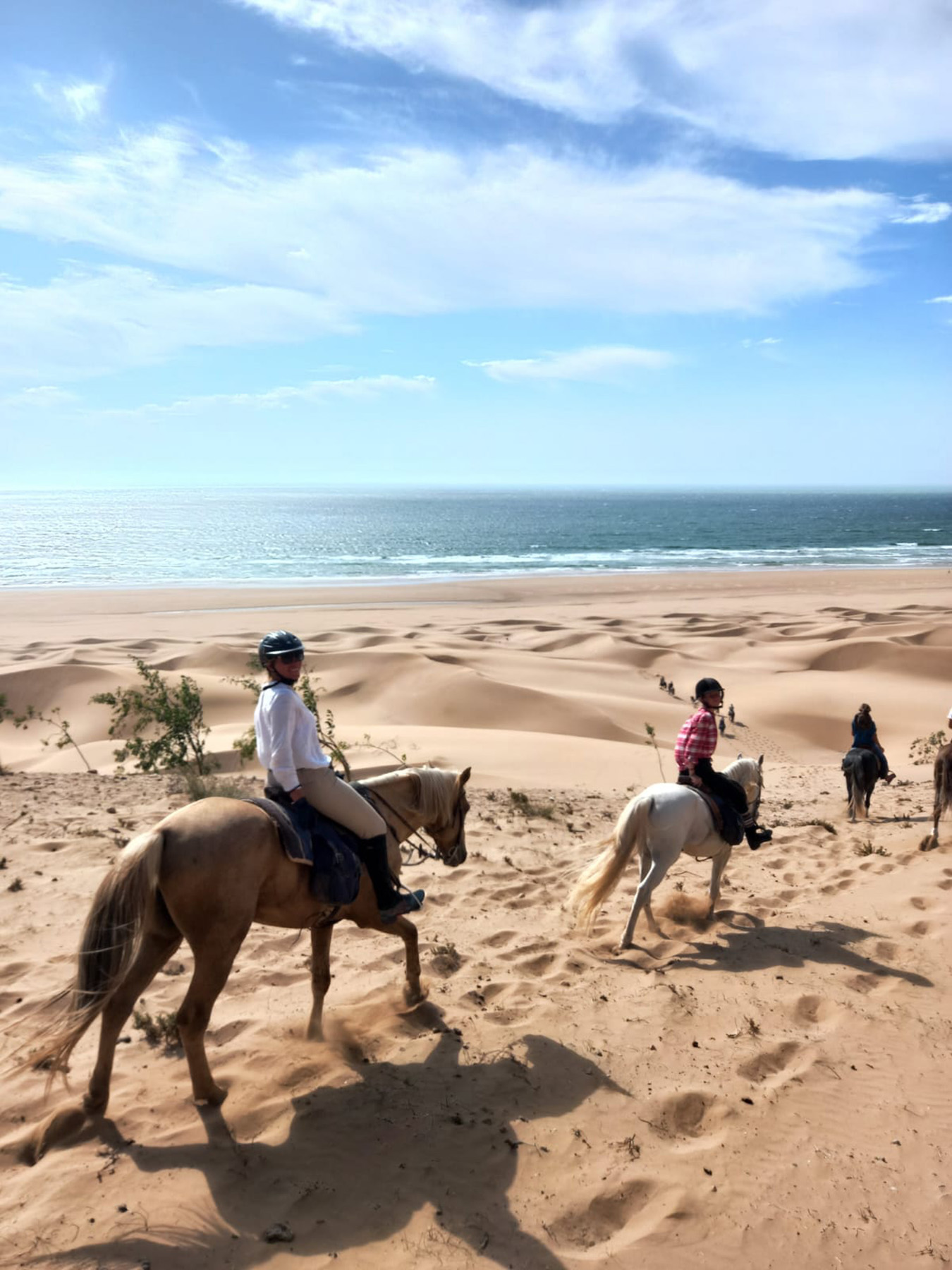
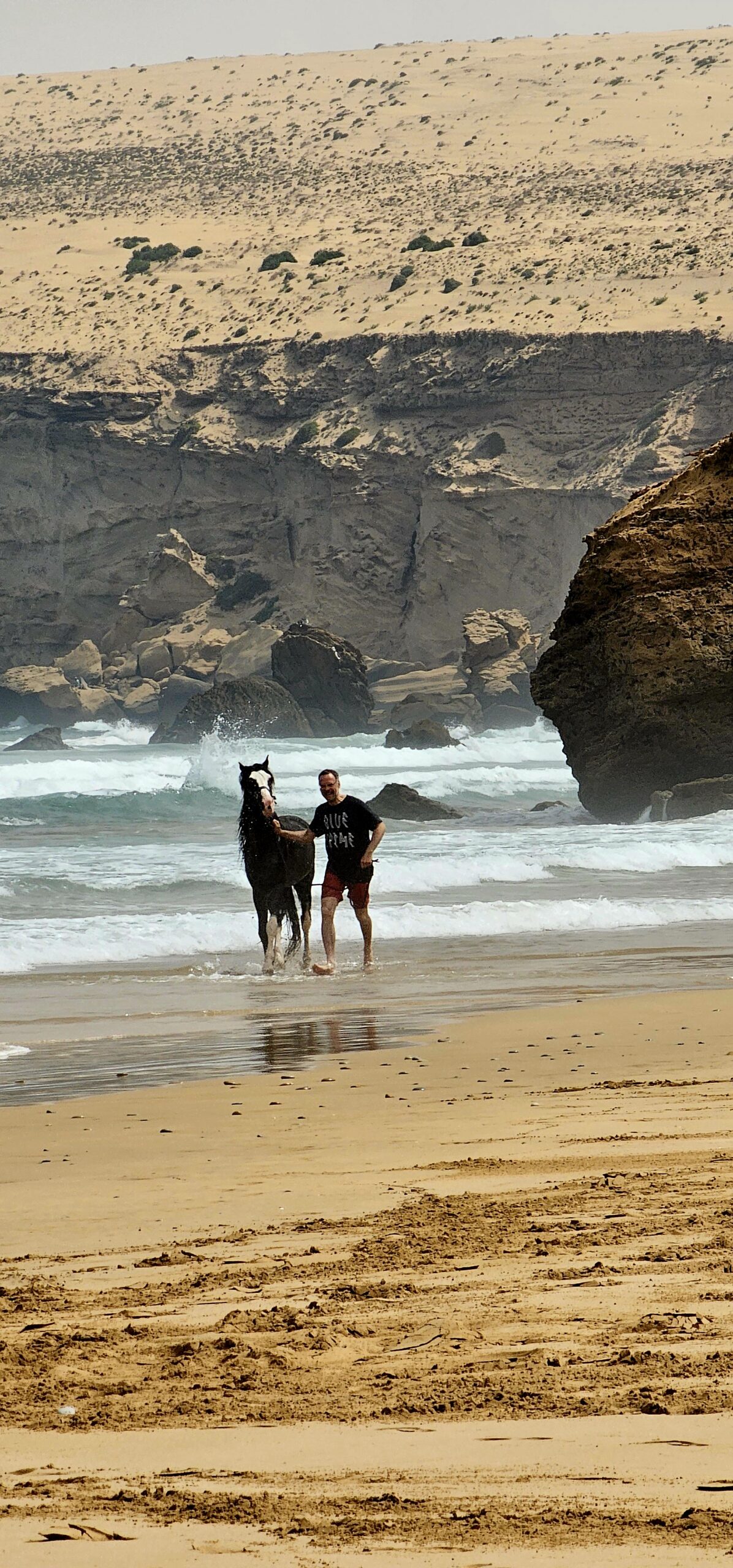
The morning is slow. We walk to a wild, empty beach — the kind of place where you can run, shout, or just sit in silence and see no one.
We swim, rest, and meet the horses.
After lunch, we saddle up and head out for our first ride — around 3 hours.
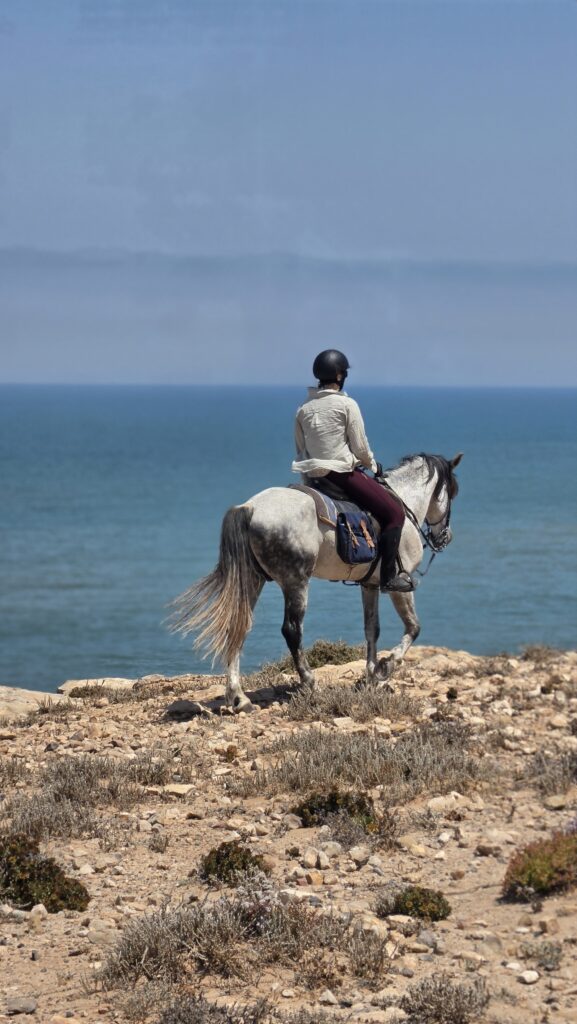
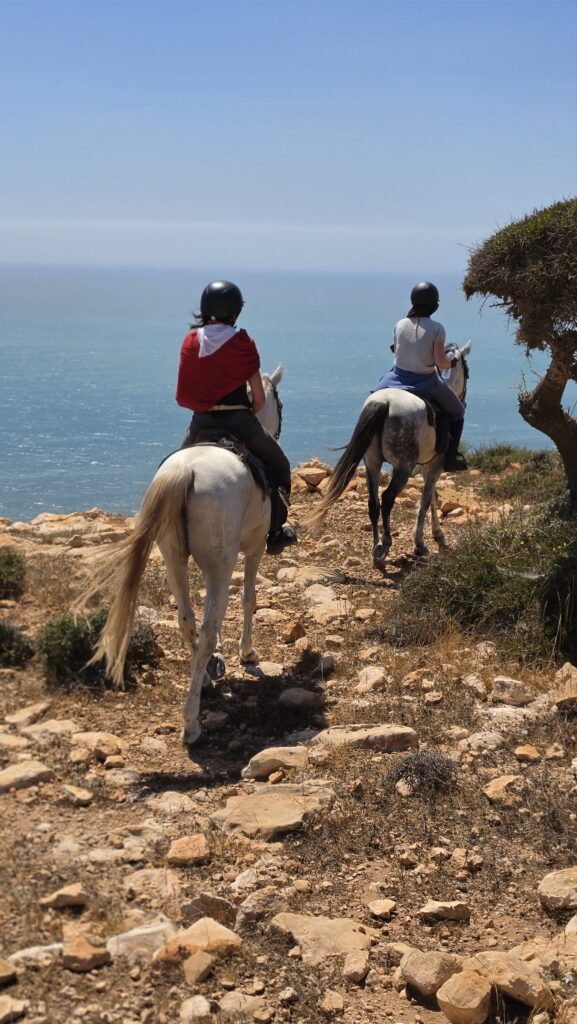
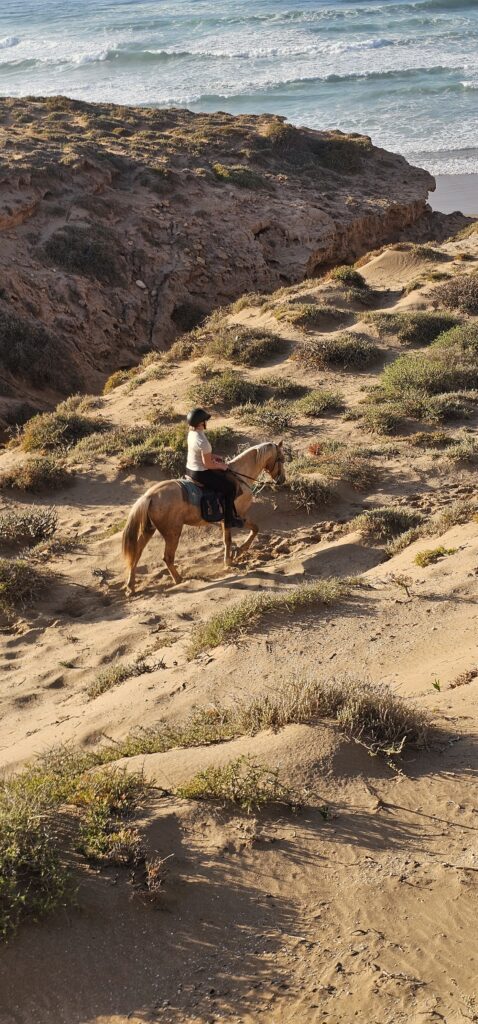
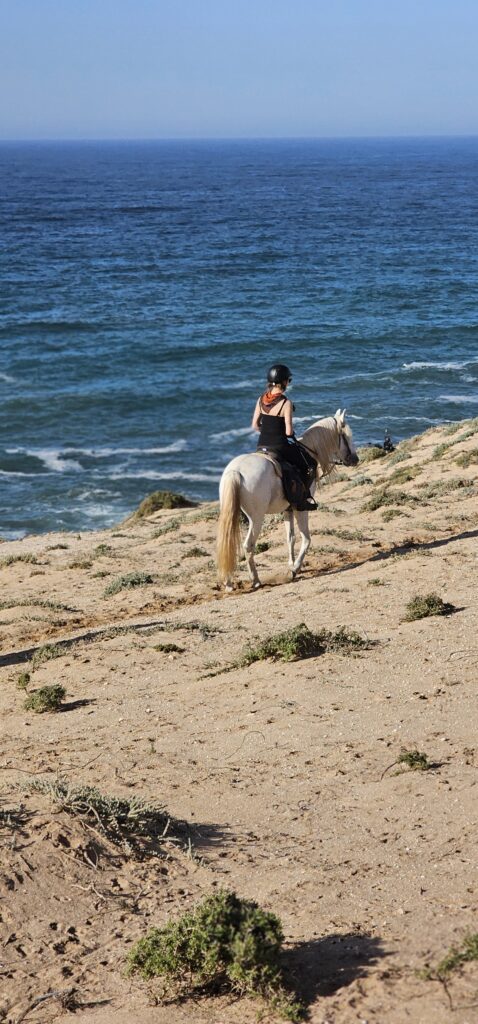
The trail runs along the cliffs, right above the breaking waves. Then it turns inland — through cacti, narrow passages, climbing higher and higher until the mountains begin.
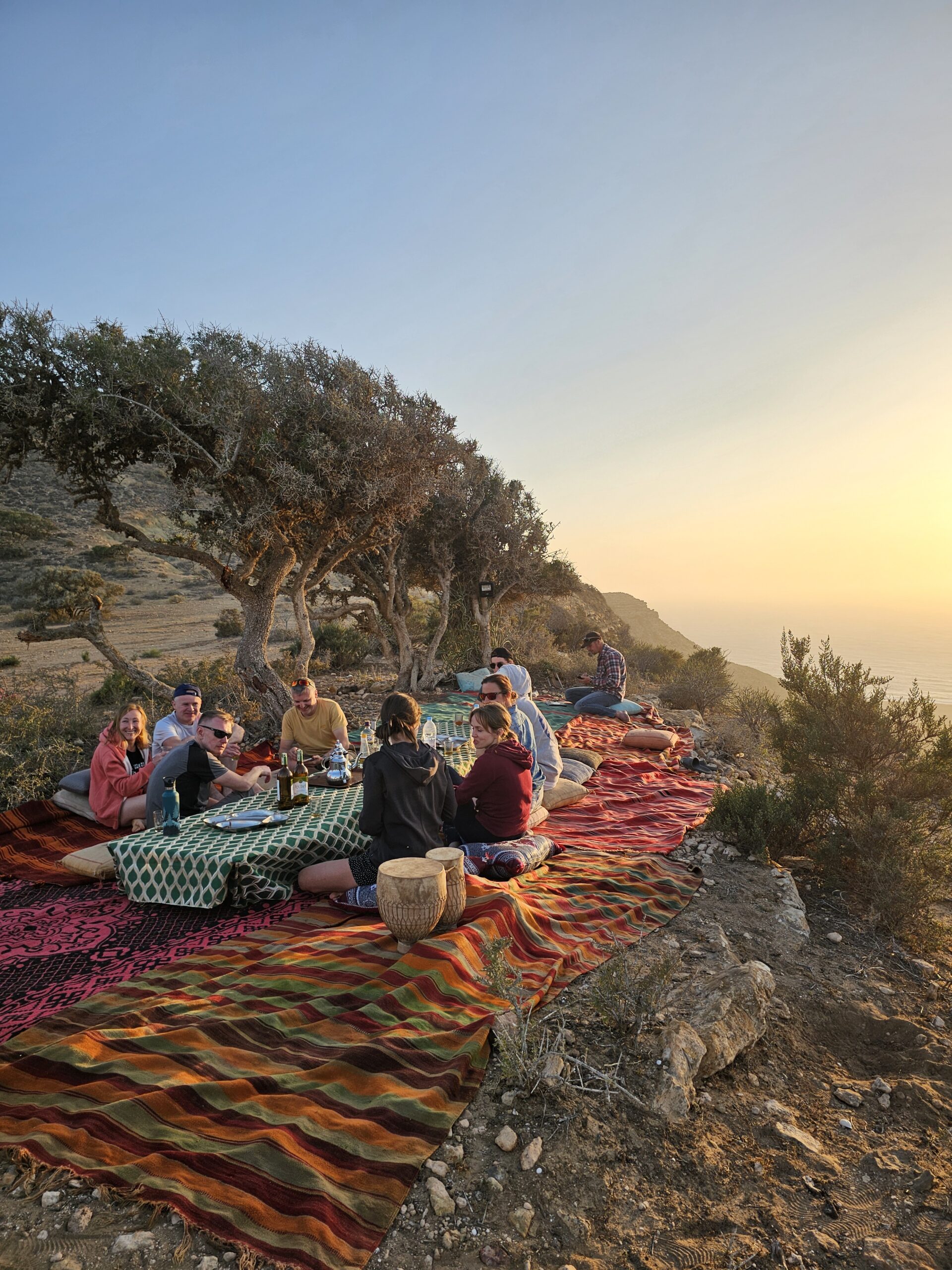
We camp on top.
Sunset over the ocean from there stays with you.
Dinner by the fire. Someone might pick up the drums. The rest just sit and look at the sky.
Day 3 — Towards the mountains and raw cliffs
After breakfast on the cliff, we move on.
The first part of the day is calmer — a few gallops, wide views. We pass Berber villages, ride through argan trees, across rolling hills. Lunch is in the shade, close to the horses.
Then the terrain changes.
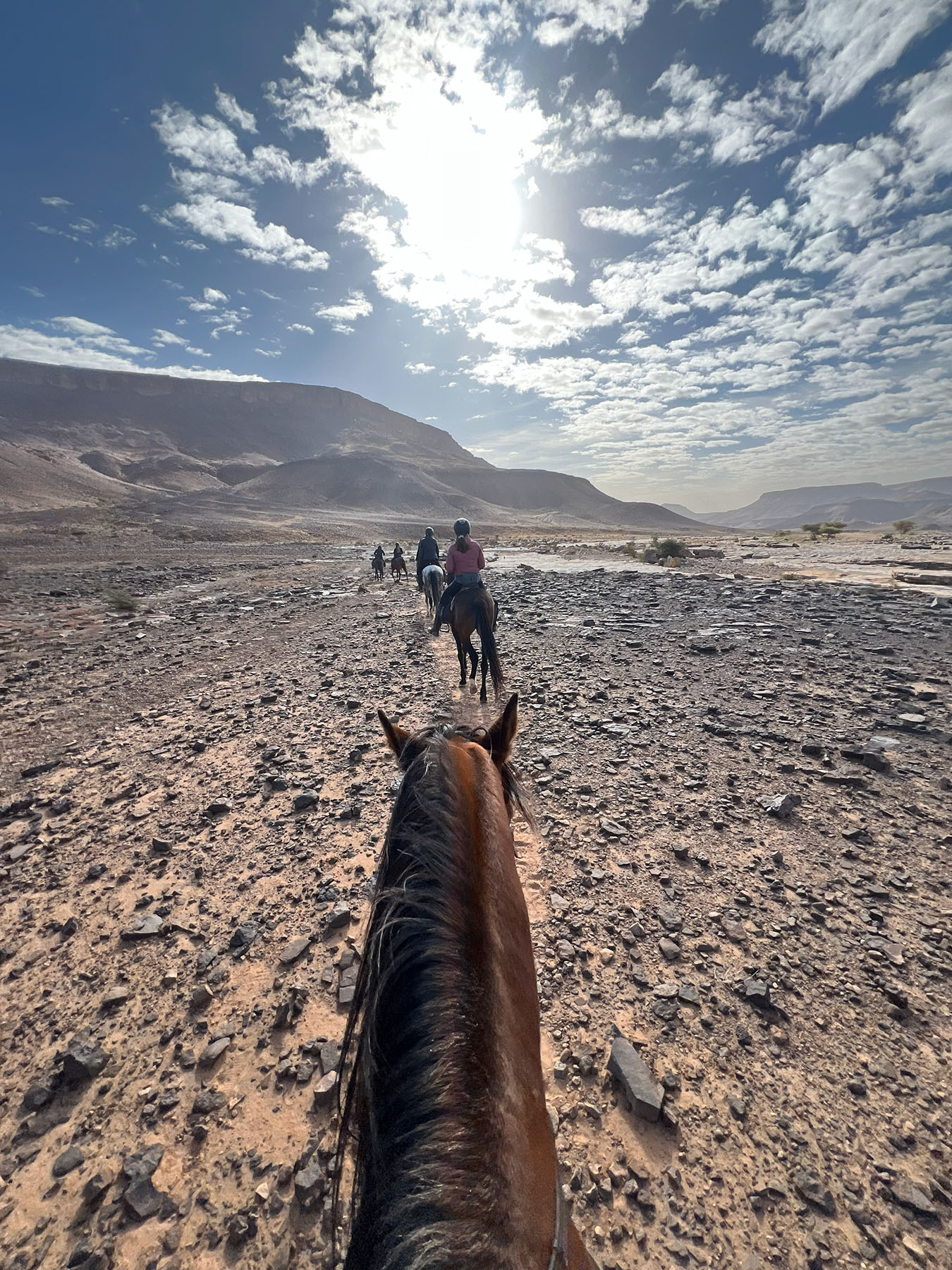
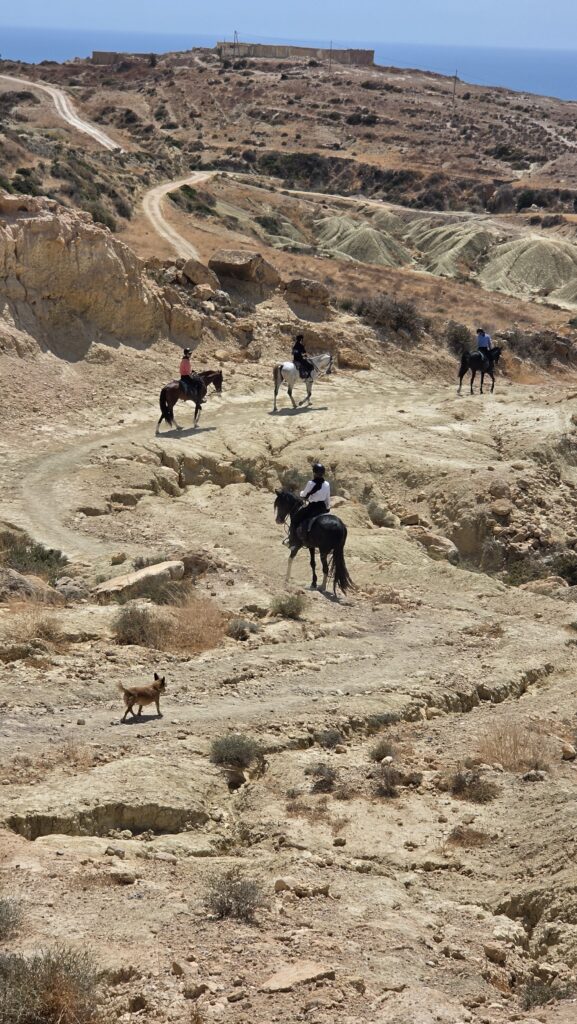
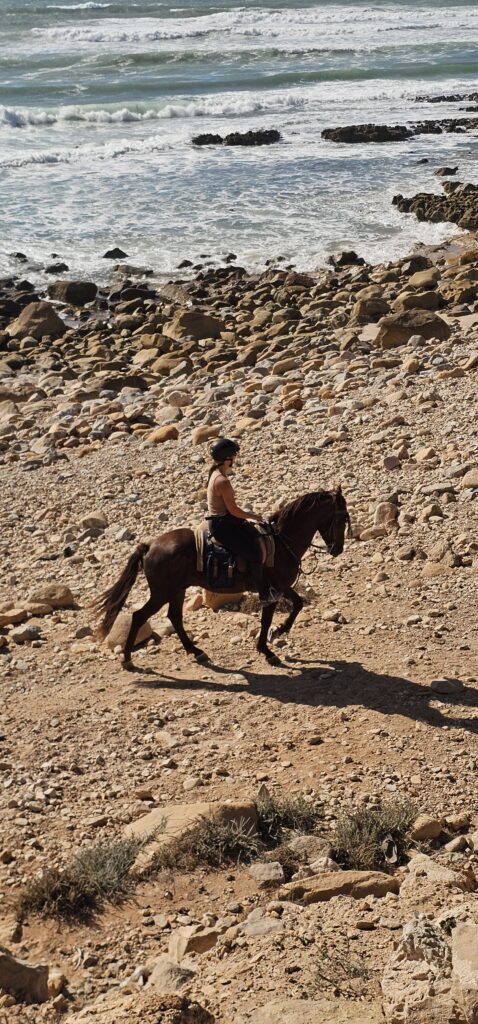
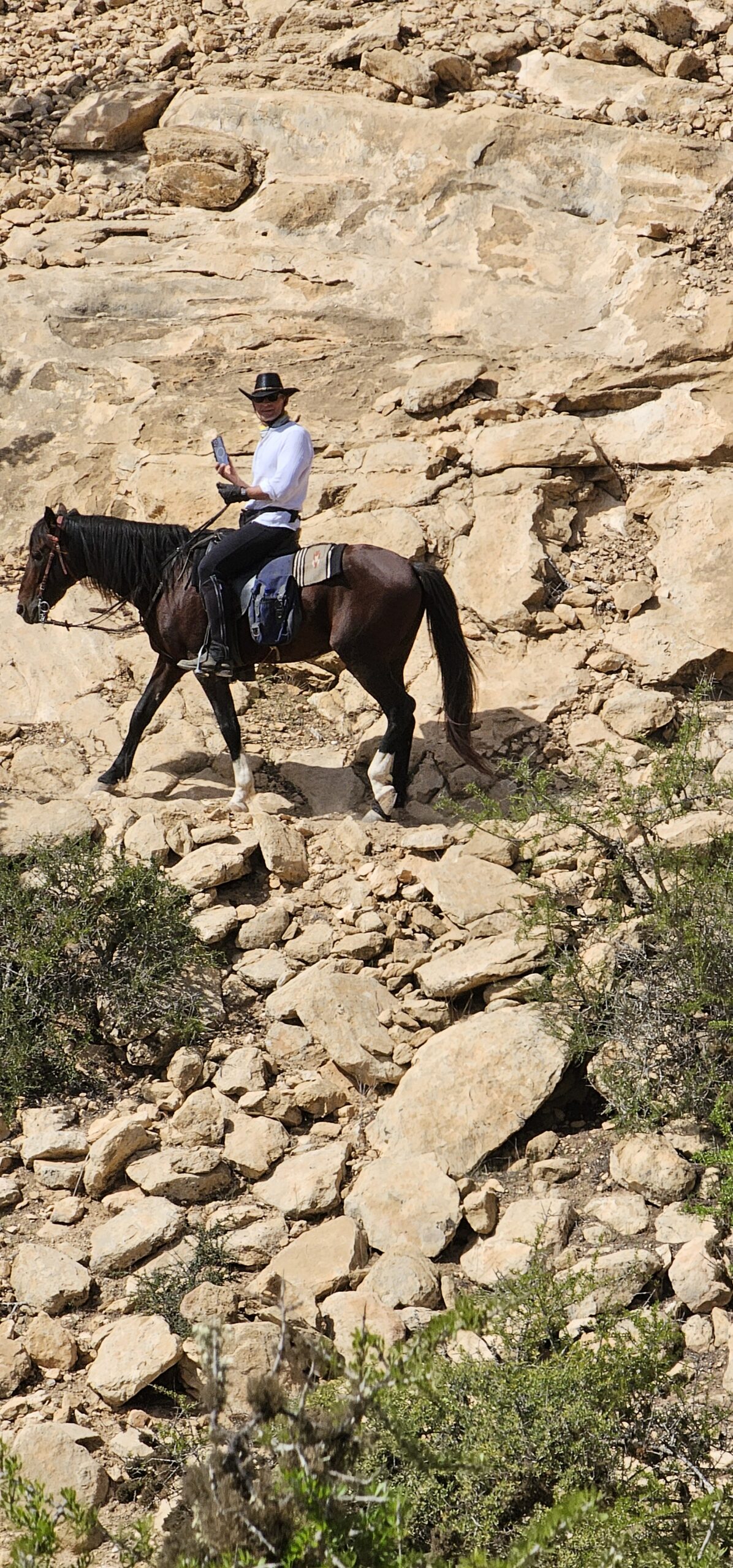
Steep descents. Narrow paths. Rock and stone. The horses place every step carefully. You move with them, not against them.
The trail follows the edge of the cliffs — disappearing, reappearing, climbing again.
It’s technical. Demanding. And worth it.
Some moments make your heart race. Others go quiet, because the view says enough.
And when the path opens — we gallop, a narrow line above the ocean.
Camp is set close to the sea. You can walk down to the beach.
Day 4 — First gallops on the beach
We ride on. The trail stays close to the water — sometimes so close you can taste the salt in the air.
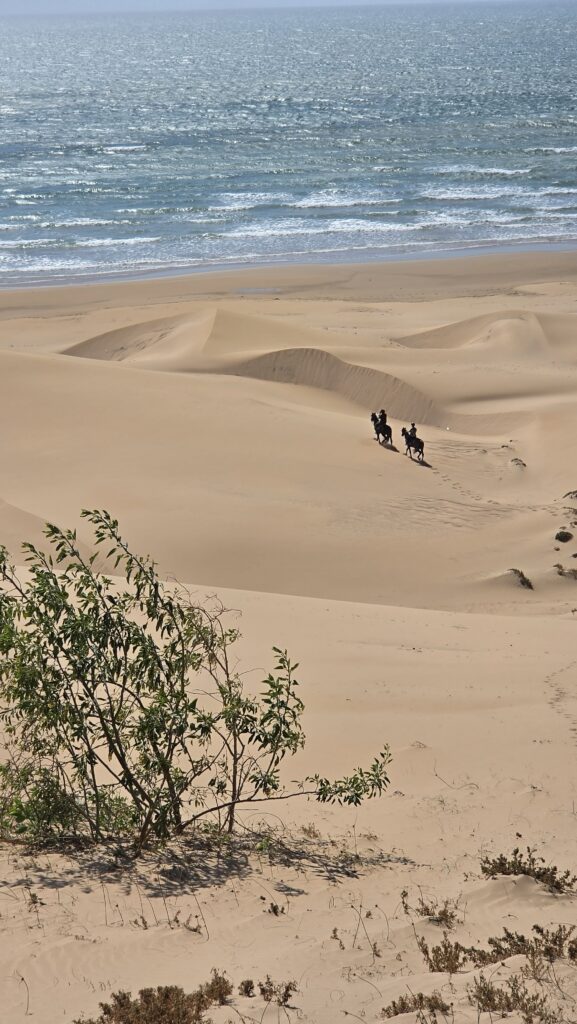
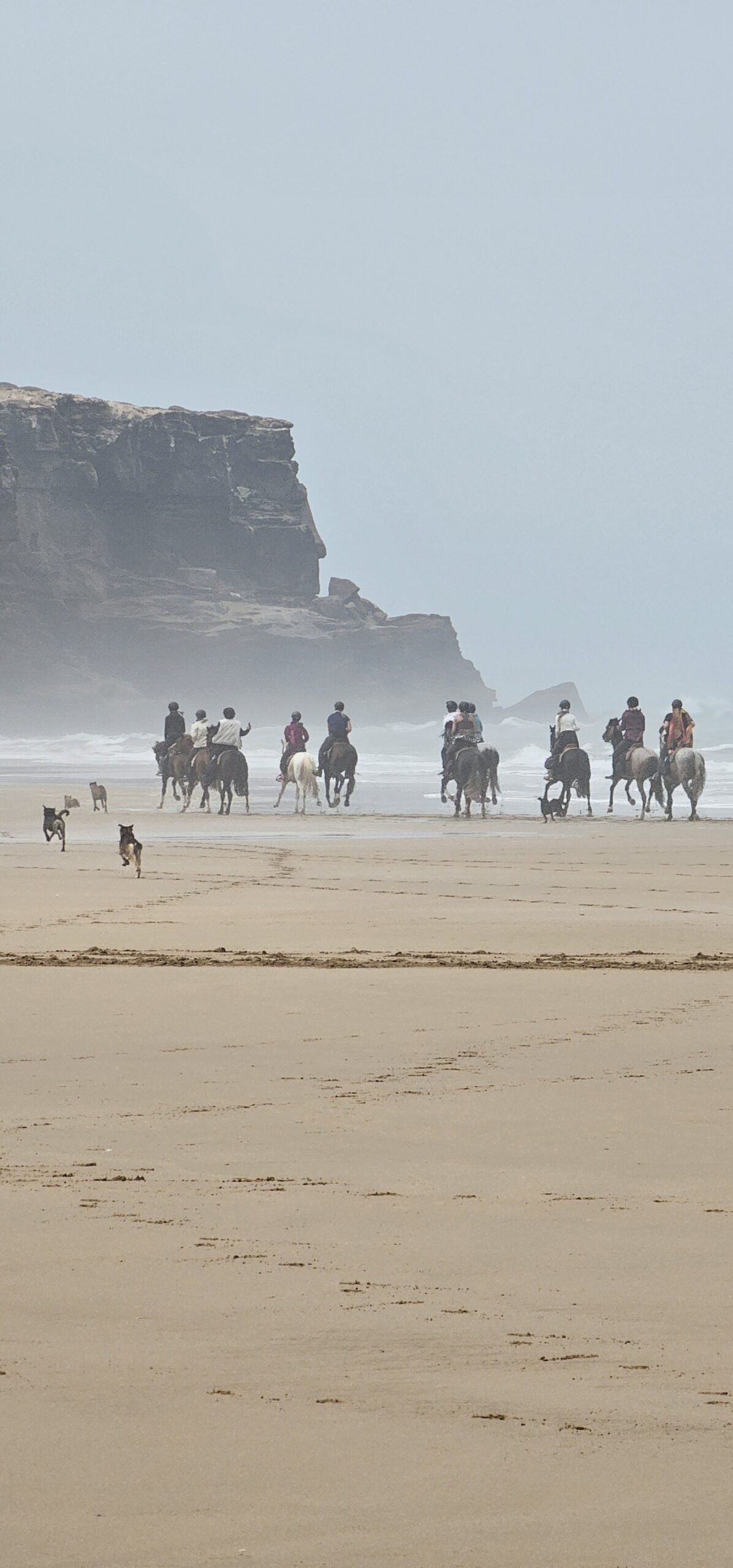
Then it opens up — a wide, empty beach.
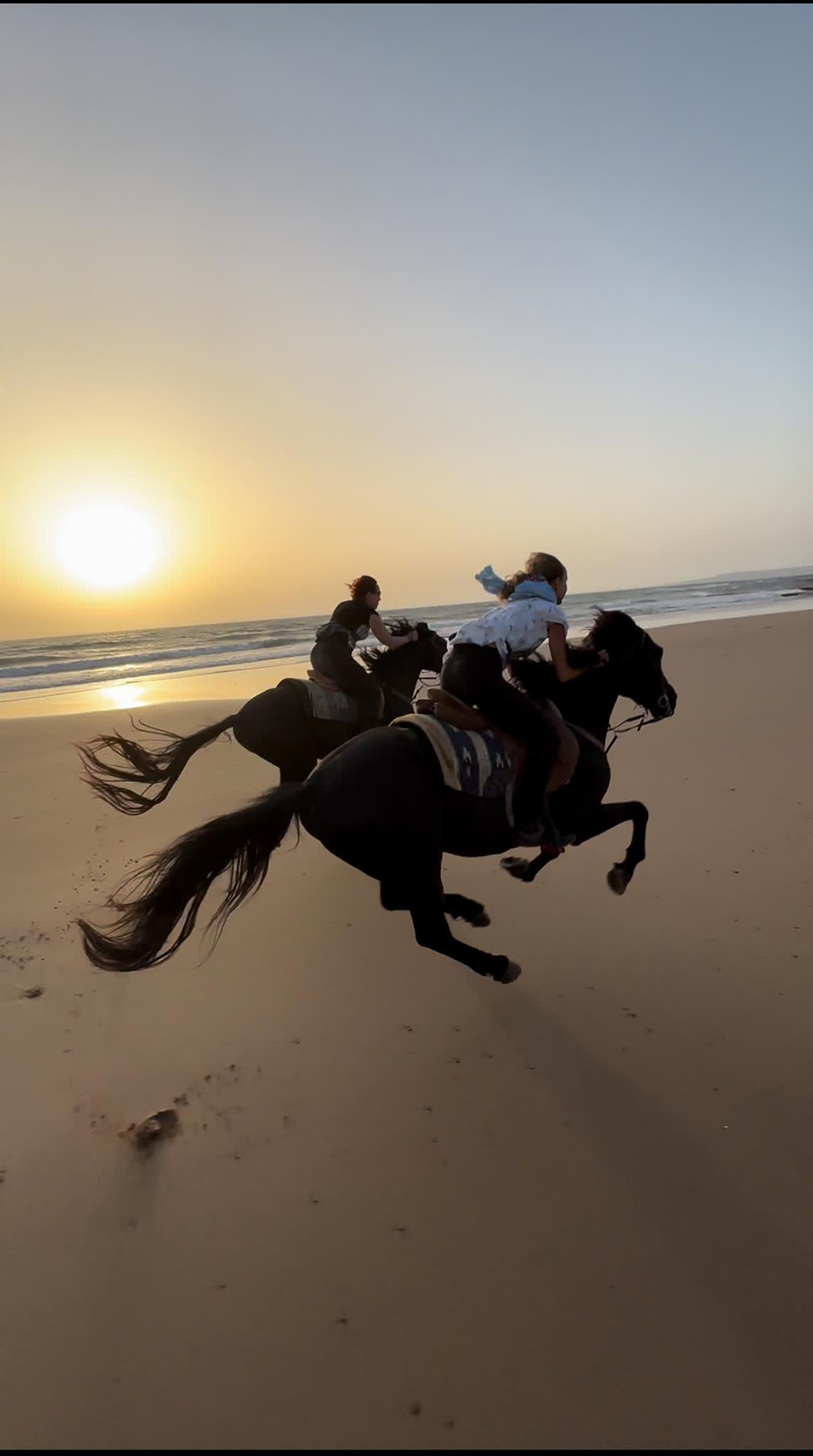
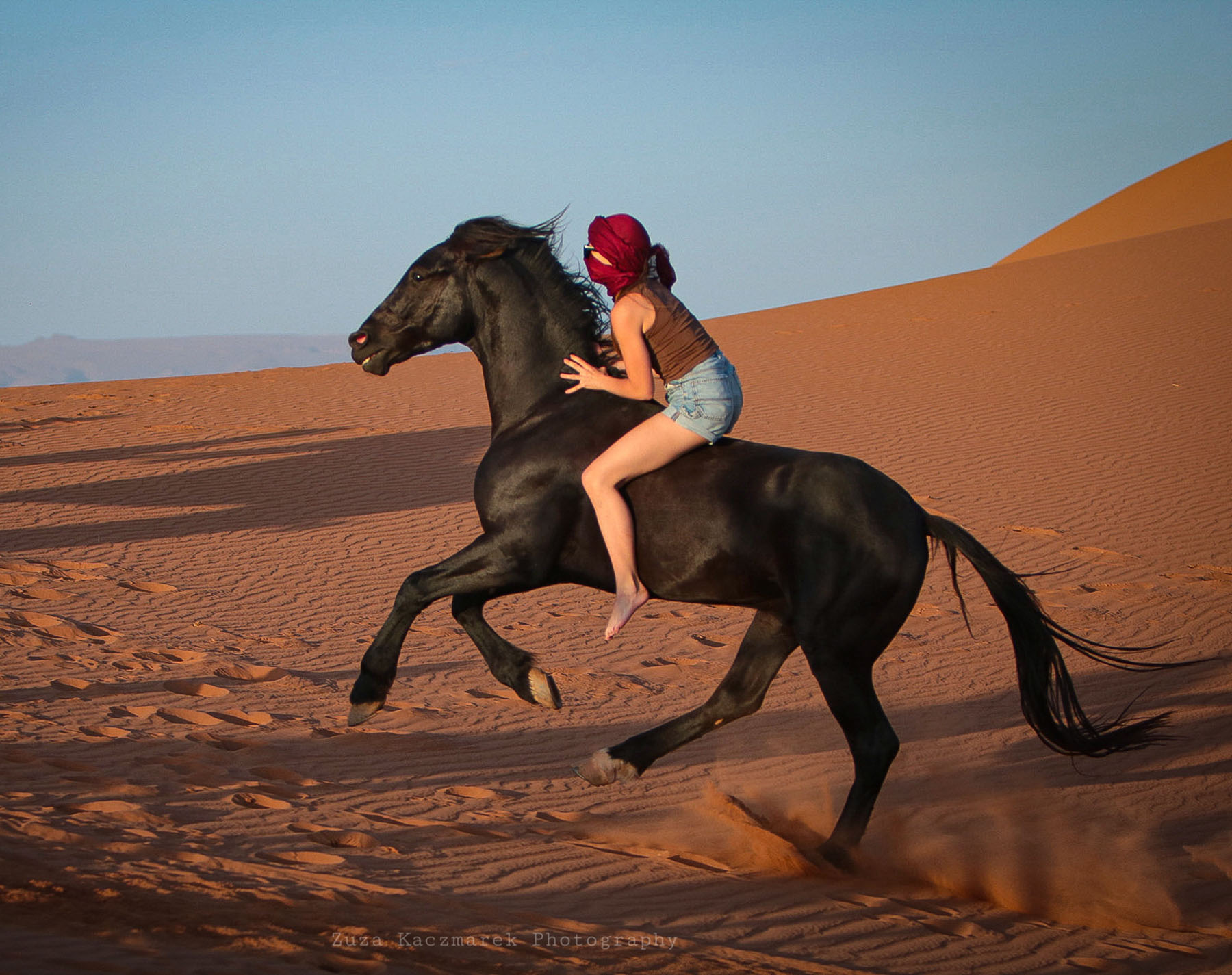
The first real gallop. Long, even, with space that feels almost unreal.
Lunch is on a cliff above the waves, or down on the beach if the conditions allow.
That night, we camp at a farm near the ocean. Close enough to walk down for a swim and wash off the dust of the day.
Dinner, drums, moonlight. Outside of time.
Day 5 — Into the argan hills
We move further inland.
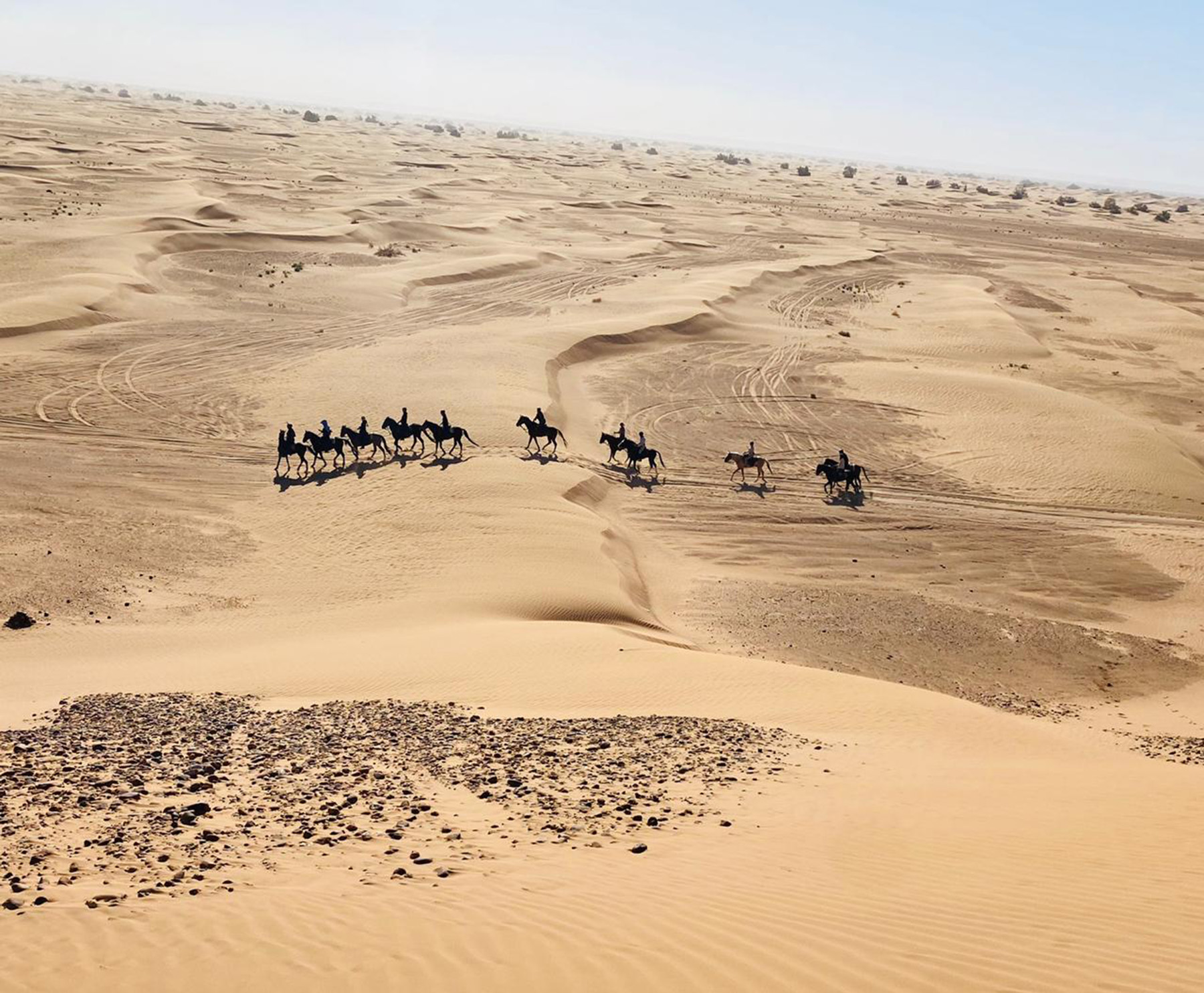
Rolling terrain, argan groves, patches of green. A quieter day.
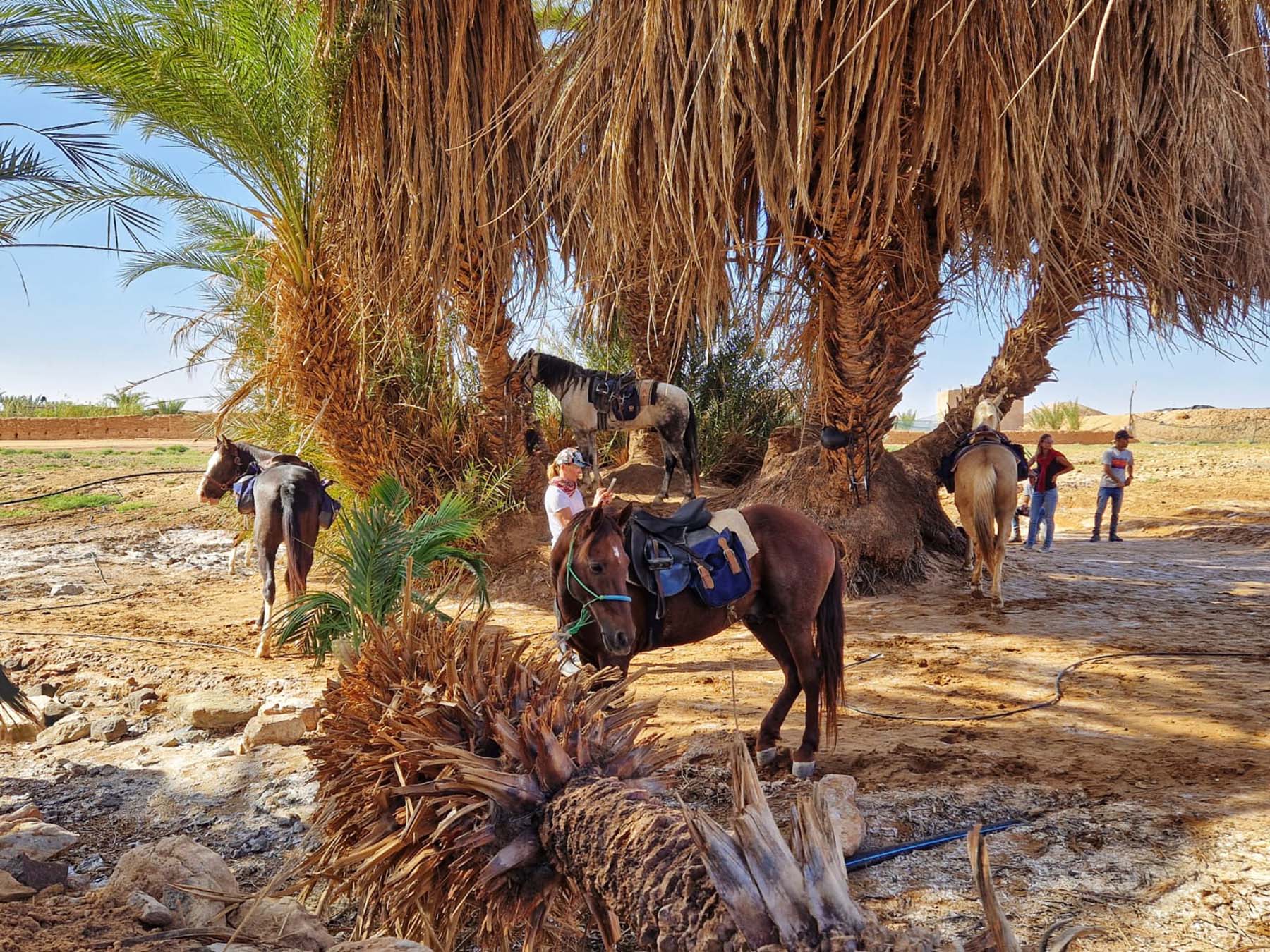
Lunch on the grass, under the trees, with the horses grazing nearby.
We spend the night either on a cliff above the ocean or in a simple house — depending on the wind.
Both have their own atmosphere.
Day 6 — Waterfalls, turtles, and endless beaches
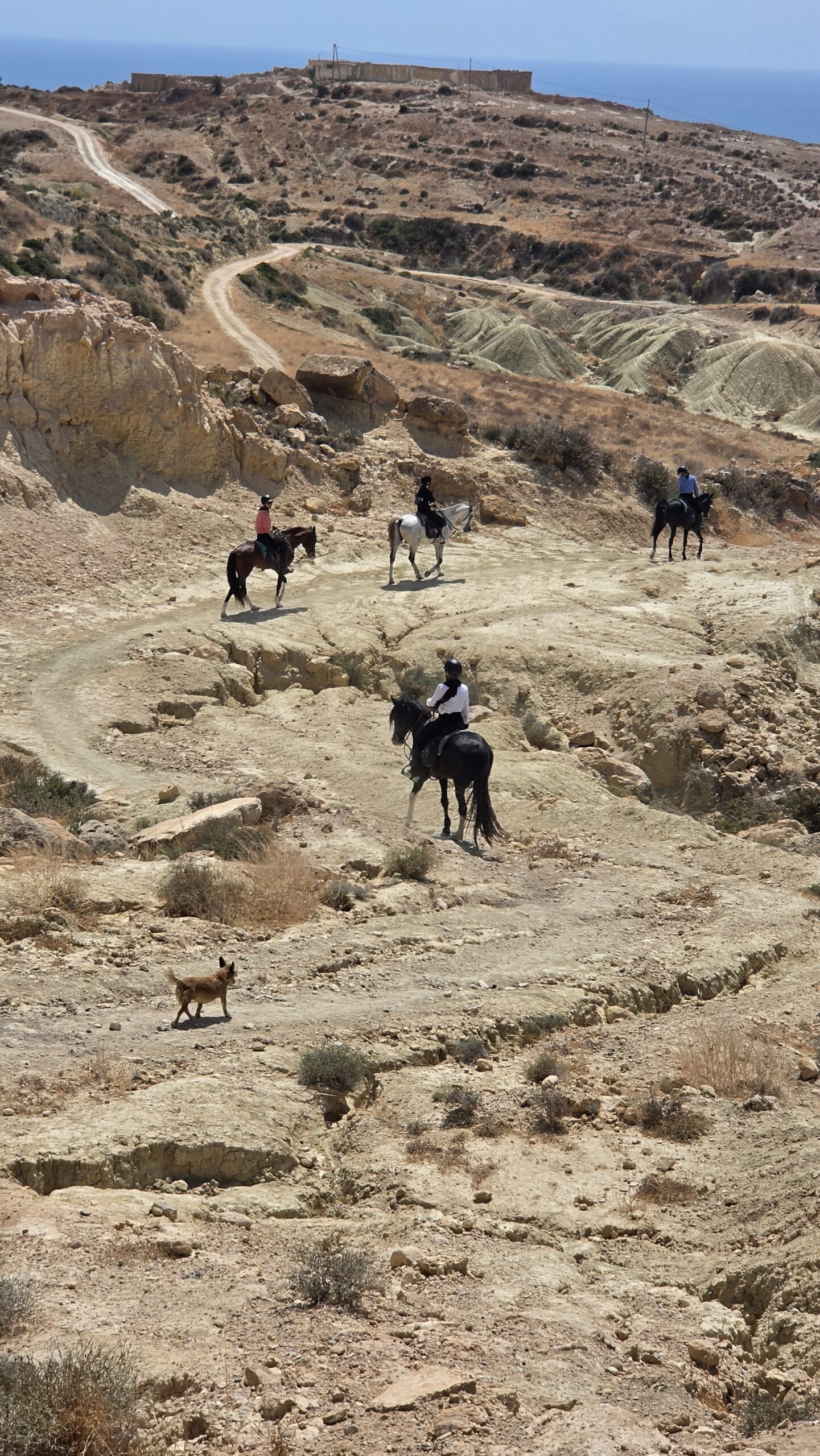
High cliffs appear — the kind where not everyone wants to look down. Narrow paths cut into the rock.
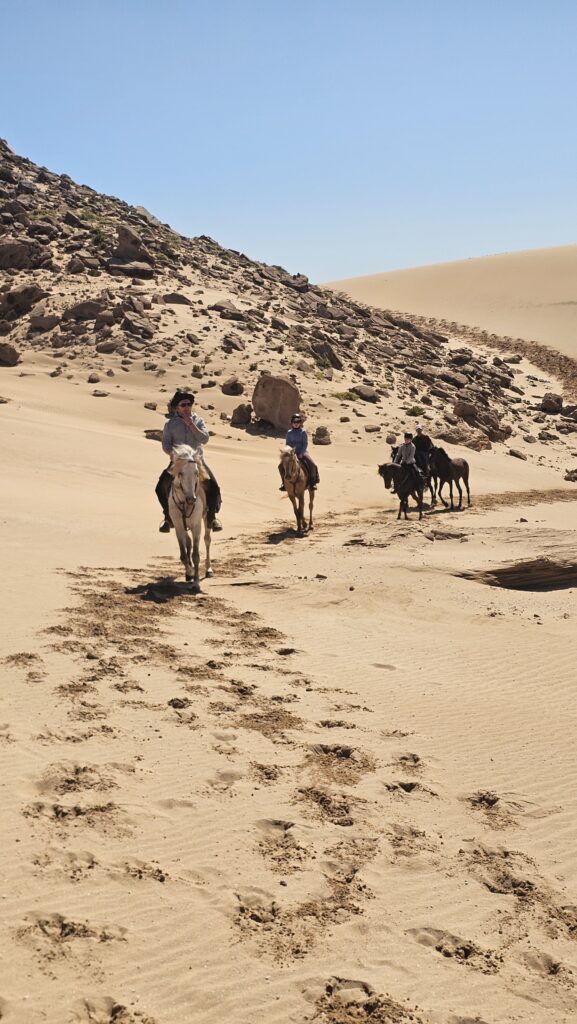
Between them, wide wild beaches — long enough for gallops that feel like they don’t end.
We stop for lunch at the Sidi M’Bark waterfalls.
The rock here is ancient. Water runs out from hidden sources beneath dunes and stone.
If we’re lucky, you’ll spot small turtles in the natural pools.
Camp is by the beach. Sunset in front of us.
One of those evenings when no one talks much. Just the sound of the ocean. Maybe drums in the distance.
Day 7 — Last gallops and back to civilisation
The last day depends on the ocean.
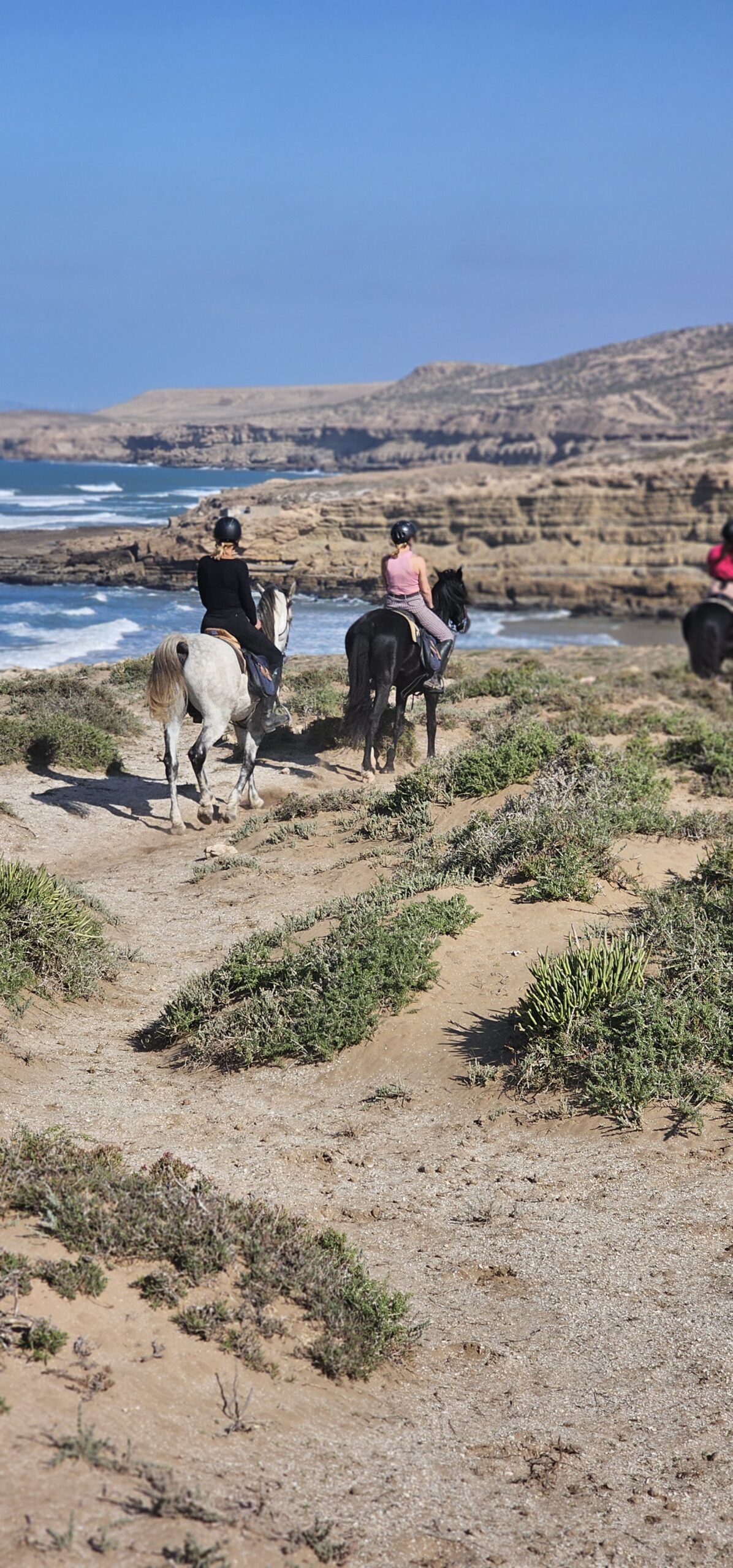
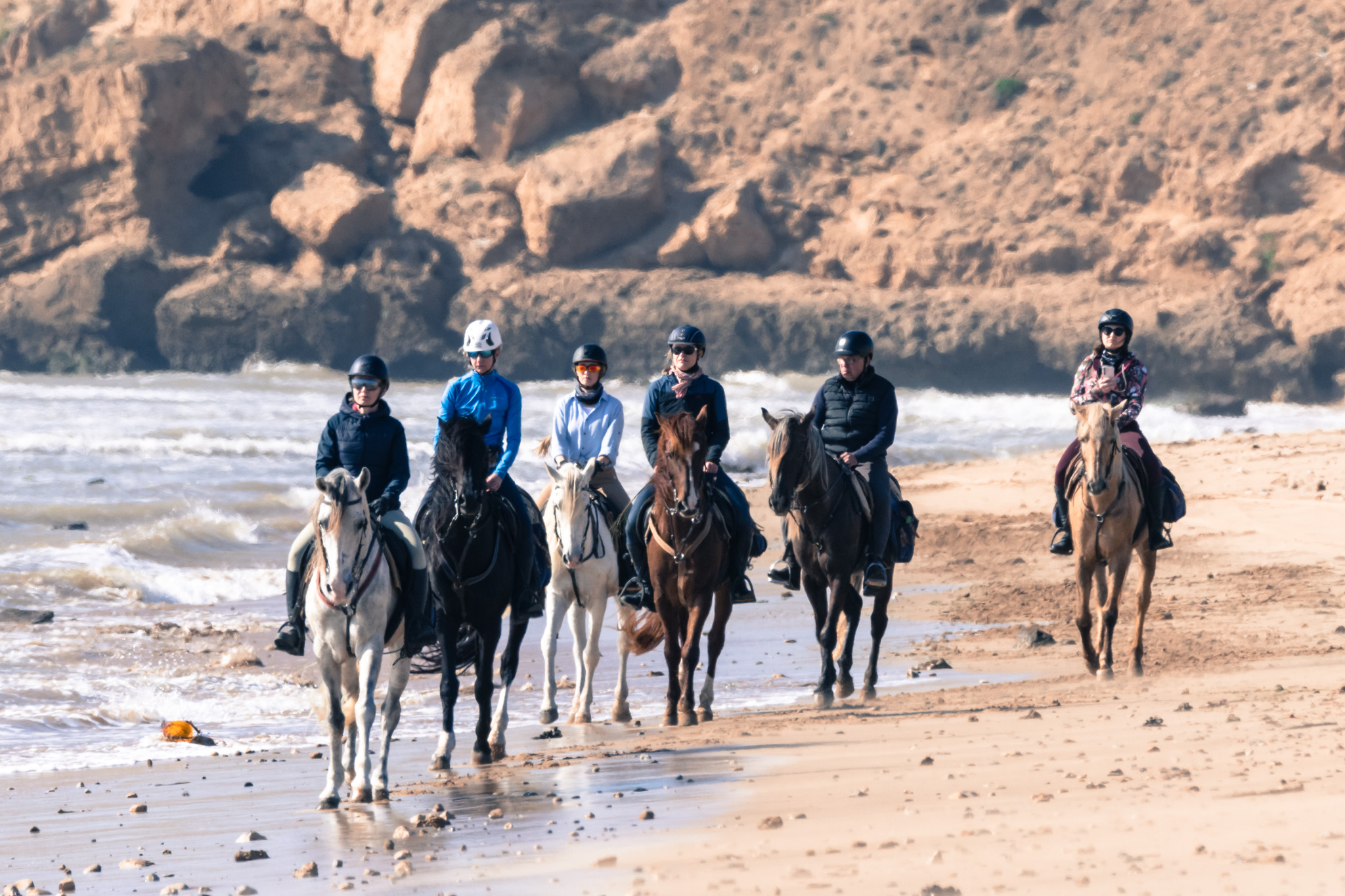
If the tide allows, we ride out for about 3 hours along the beaches — one last open gallop, fast and wide.
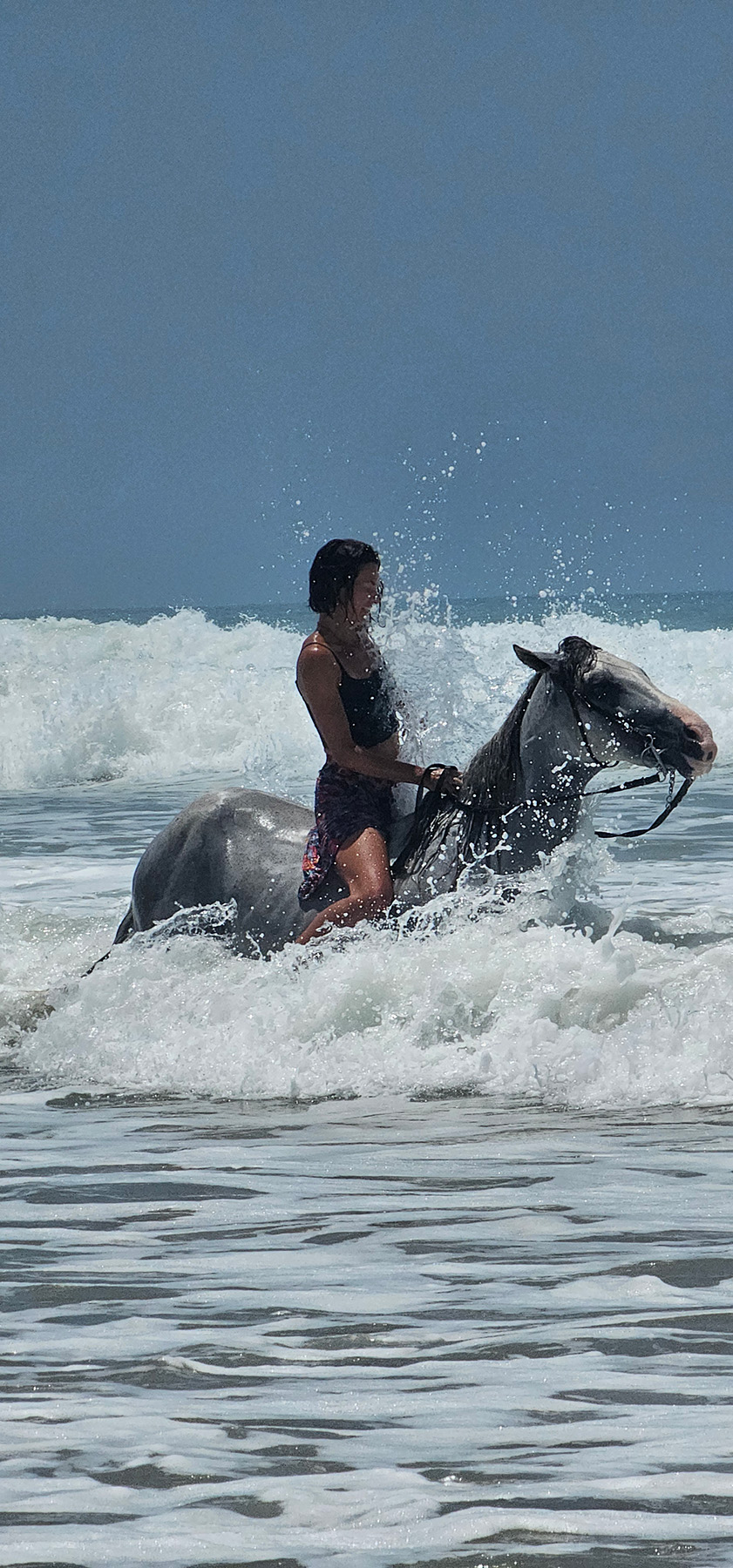
If not, we go into the water with the horses, then take a shorter, scenic route back to the stable, ending with one final gallop.
Lunch is at the villa with a pool — time to rest, wash, and slow down after the ride.
In the afternoon, we head to Essaouira.
Old city walls, narrow streets, markets full of colour and craft.
In the evening, we return for dinner.
Day 8 — Leaving Morocco
The next day, we take you to the airport.
If your flight is later, we can stop at a local hammam.
A place where, for centuries, people have washed away dust, salt, and the road — with black soap, warm water, and time.
A good way to finish the ride.
What to bring
Power bank — no electricity at camp
Headlamp or torch
Small pillow
Sleeping bag (comfort 10–15°C)
Basic first aid (painkillers, stomach meds, plasters, disinfectant)
Sunglasses
Sunscreen (SPF 50+)
Swimwear and flip-flops