Desert Trail, West to East
Ride details
Price
1250 €
Level
advanced
Group
max
12
riders
Available dates
Additional costs
flights, lunches on the way to Zagora, Marrakech and Aït Ben Haddou, entrance fees, insurance
Day 1 — Marrakech
You land in Marrakech — one of the most intense cities in Morocco. From the first moment, everything hits at once: spices, smoke from street grills, vendors calling out, engines, voices, music.
Jemaa el-Fna is the center of it all. Food stalls, piles of olives, fresh juices, sweets, souvenirs, snake charmers, street performers. This is where it begins.
You have the afternoon to explore on your own. Wander the medina, get lost in the streets, step into gardens, palaces, small museums. If you want a few key places, we recommend Majorelle Garden, the Saadian Tombs, Bahia Palace, and Le Jardin Secret — but don’t try to do everything. Marrakech doesn’t work like that.
We stay in a traditional riad in the heart of the medina. Dinner, a bit of quiet, and time to settle into the rhythm of this place.
Day 2 — Towards the Atlas and the desert
Early start. We head south into the Atlas Mountains, leaving the cities behind and moving into a more raw, open Morocco.
We cross the Tizi n’Tichka pass — over 2000 m above sea level. Winding roads, sharp turns, constant elevation changes. Beautiful, but demanding. If you’re prone to motion sickness, prepare for it.
The landscape keeps shifting — rocky mountains, deep valleys, green oases below, palms, blooming almond trees, clay houses stuck to the slopes. This is where you start to feel the desert coming.
We reach Foum Zguid — one of the last towns before the Sahara.
Night in a simple local camp — small rooms, but with beds, electricity, and a shower. Last night before we go fully into the desert.
Day 3 — First miles of the Sahara
After breakfast, we head out.
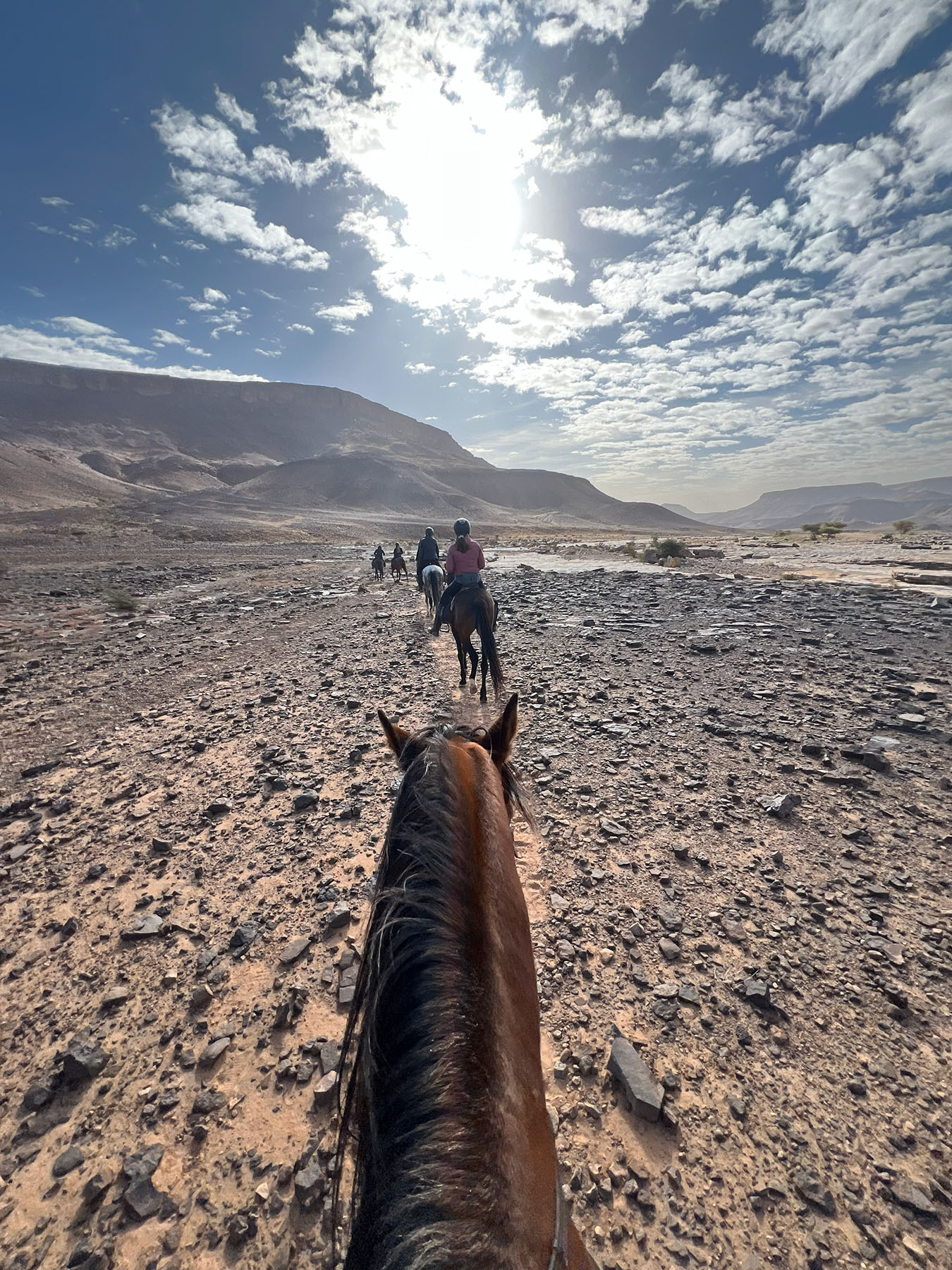
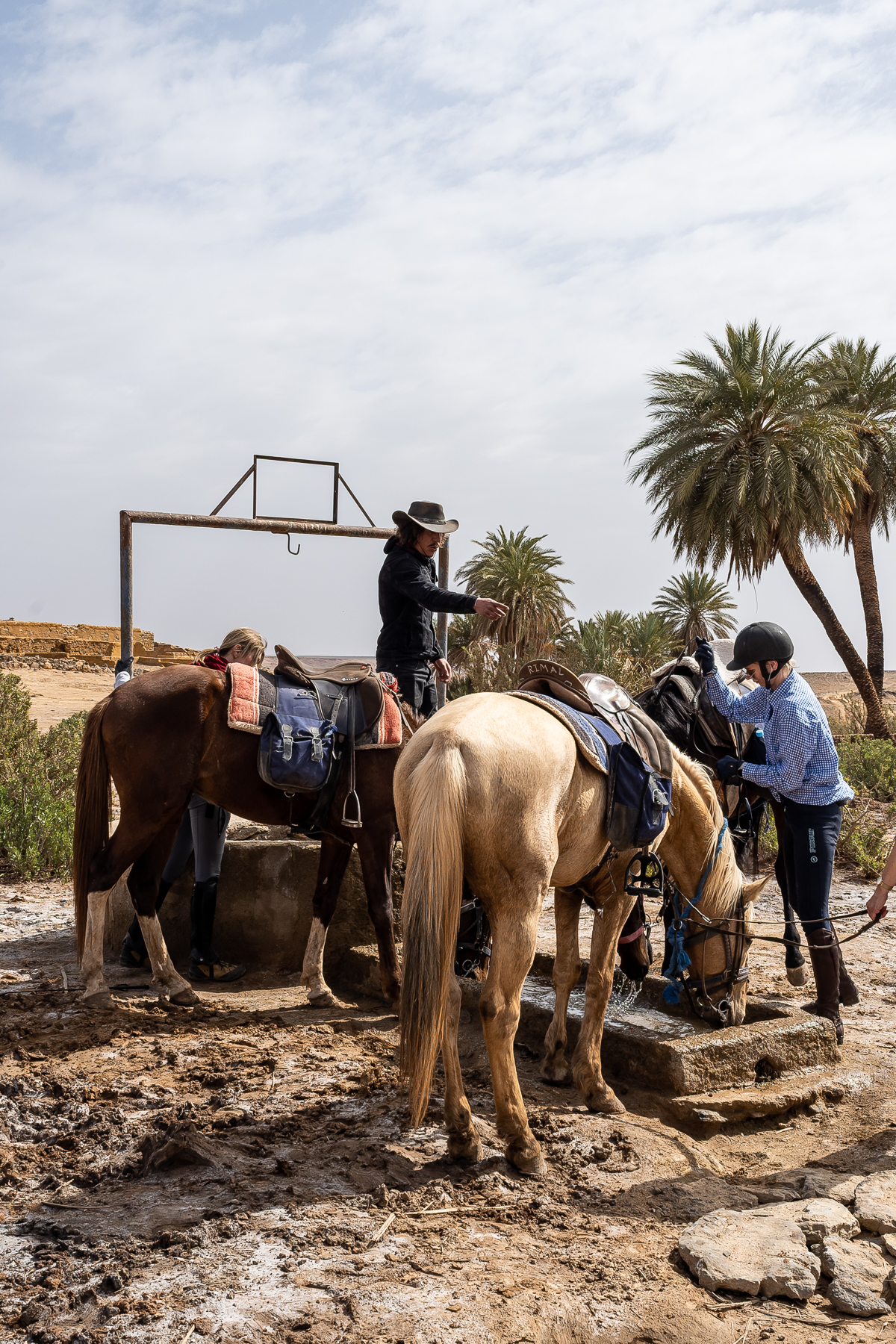
This is the first real day in the desert. Rocky ground, mountains in the distance, space in every direction.
You start noticing traces of another world. This used to be underwater. Fossils are everywhere — shells, shapes pressed into stone, structures that look like old reefs. Salt patches shining white in the sun. Sometimes even meteorites.
A day that changes how you look at this place.
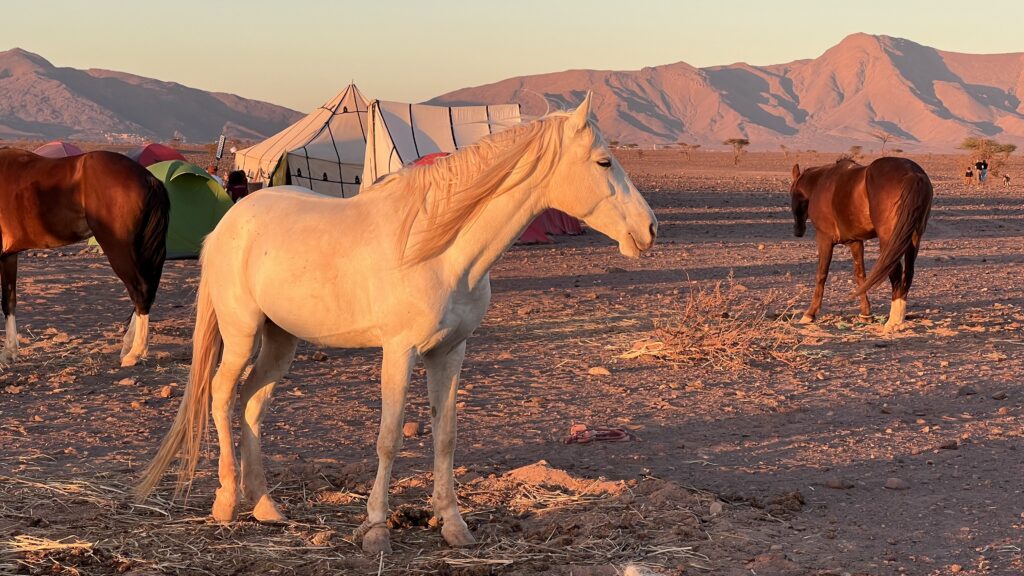
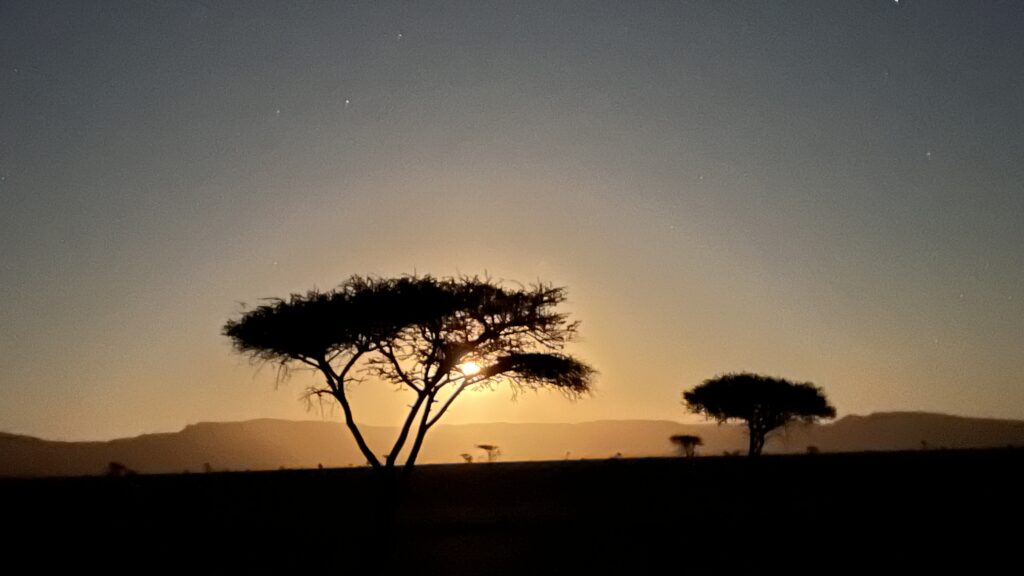
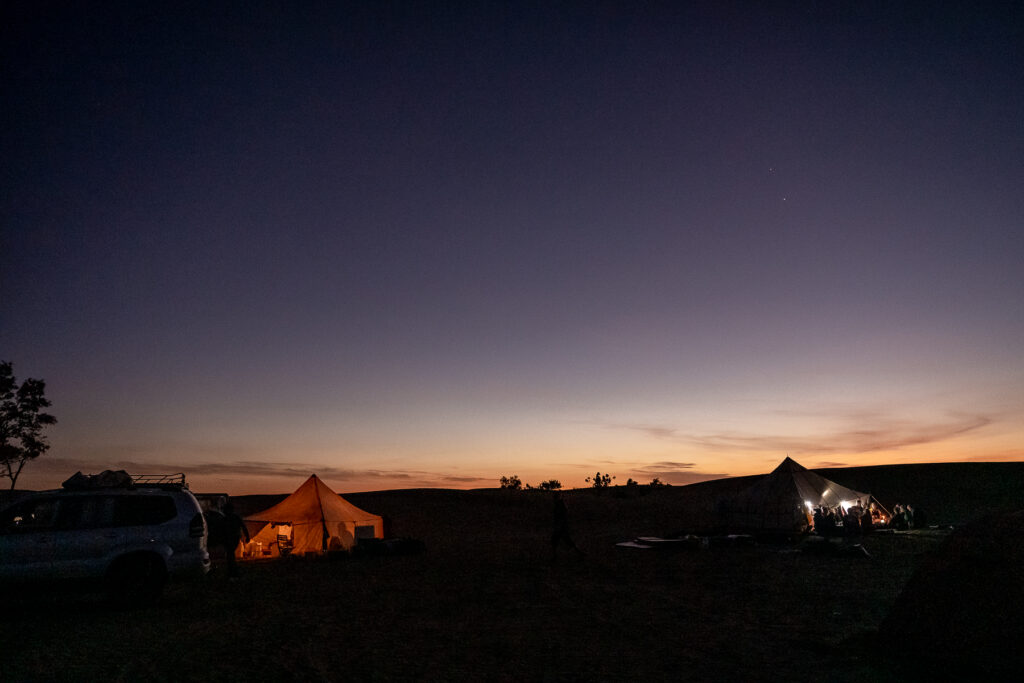
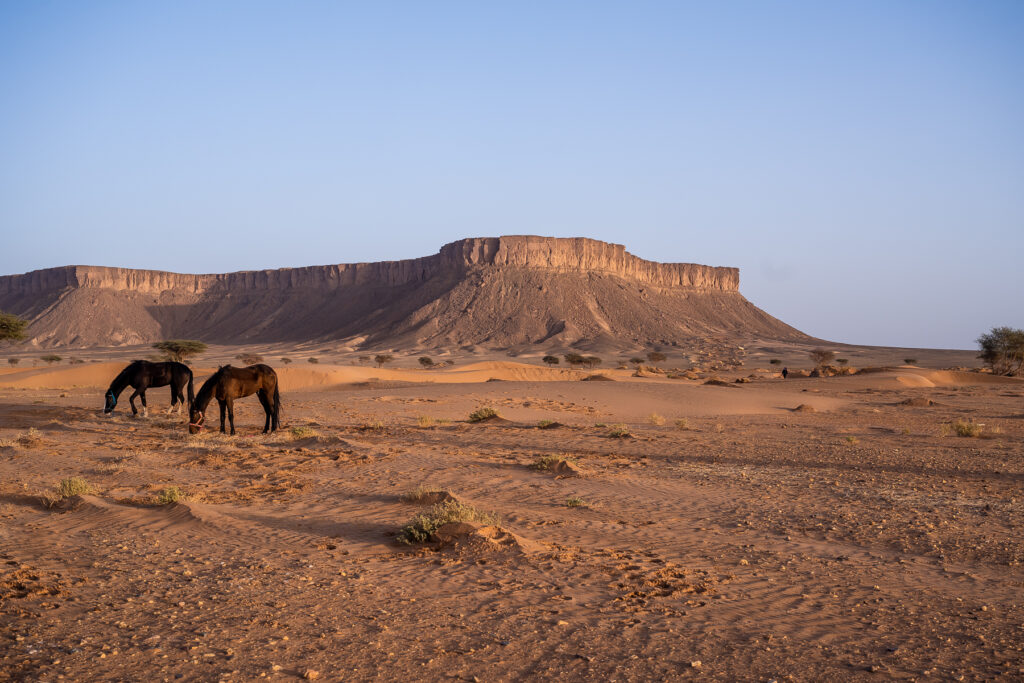
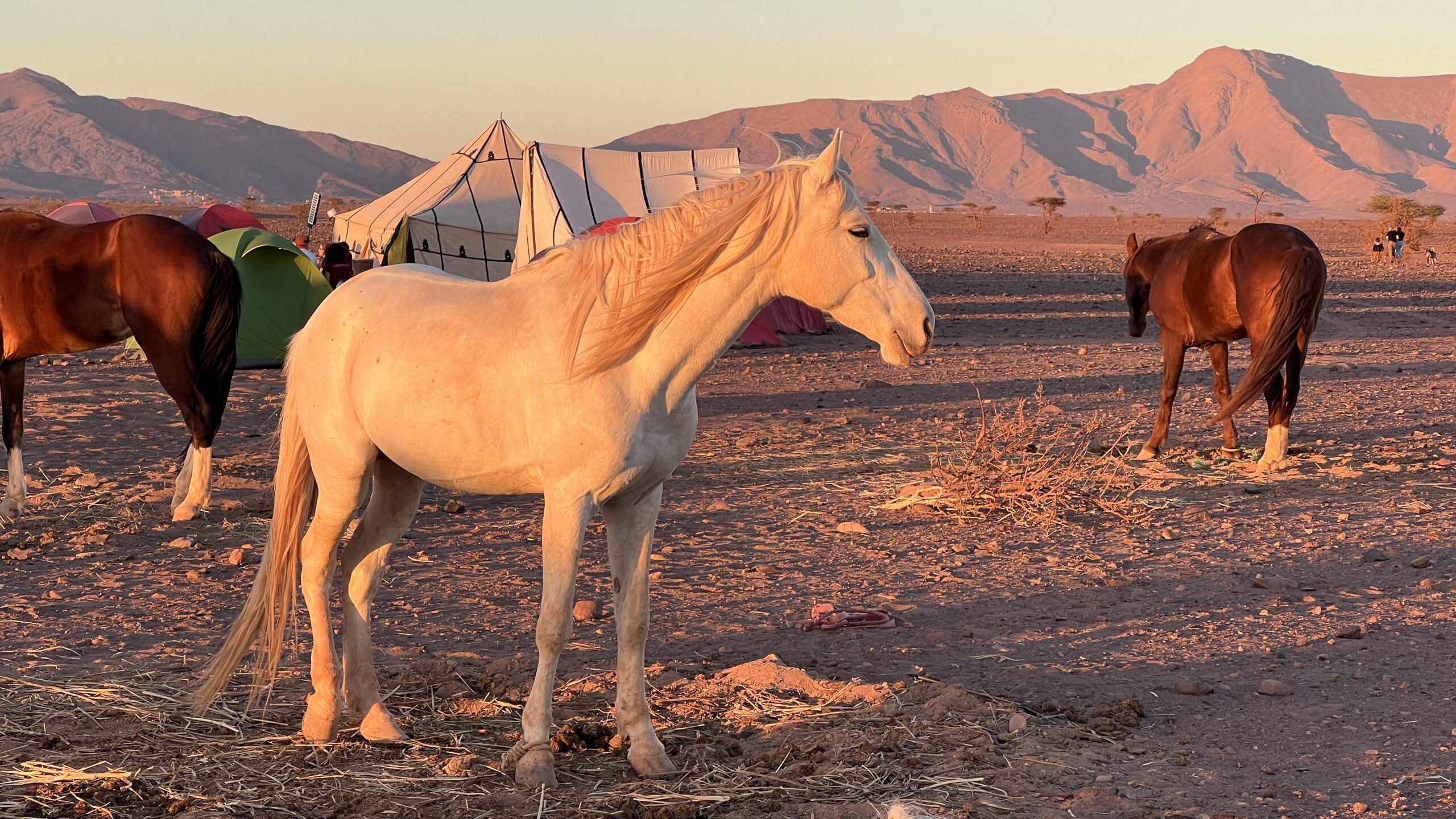
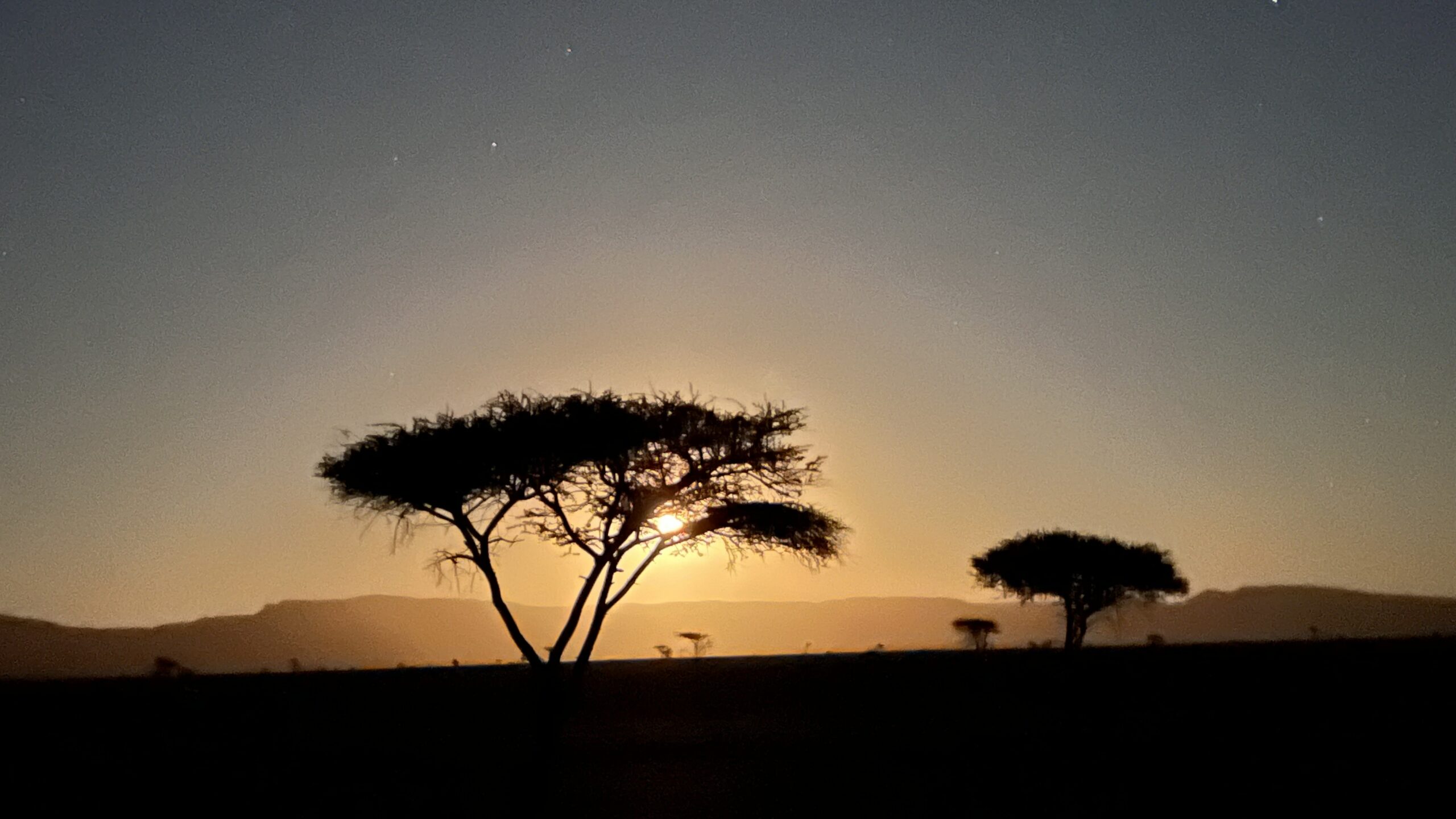
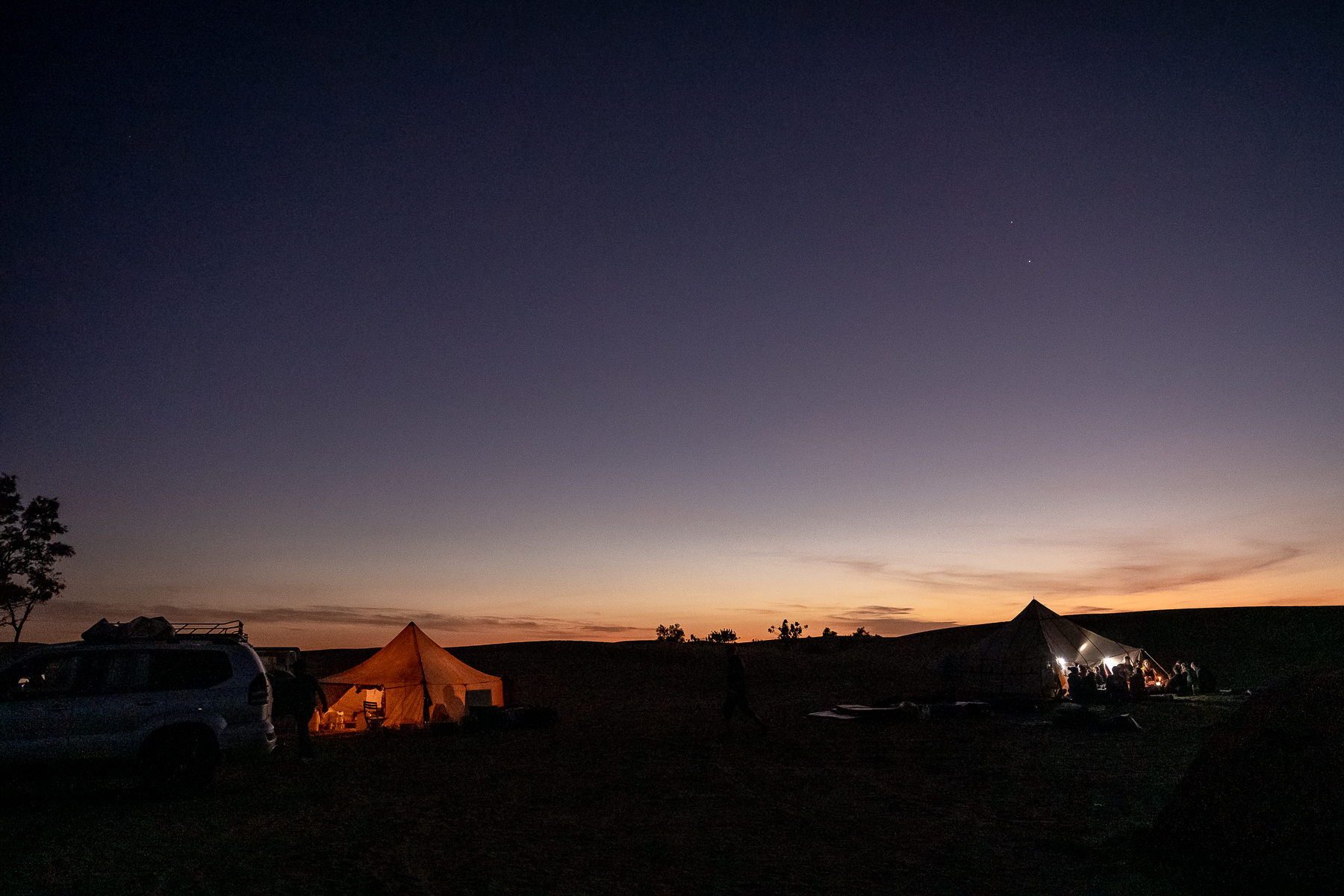
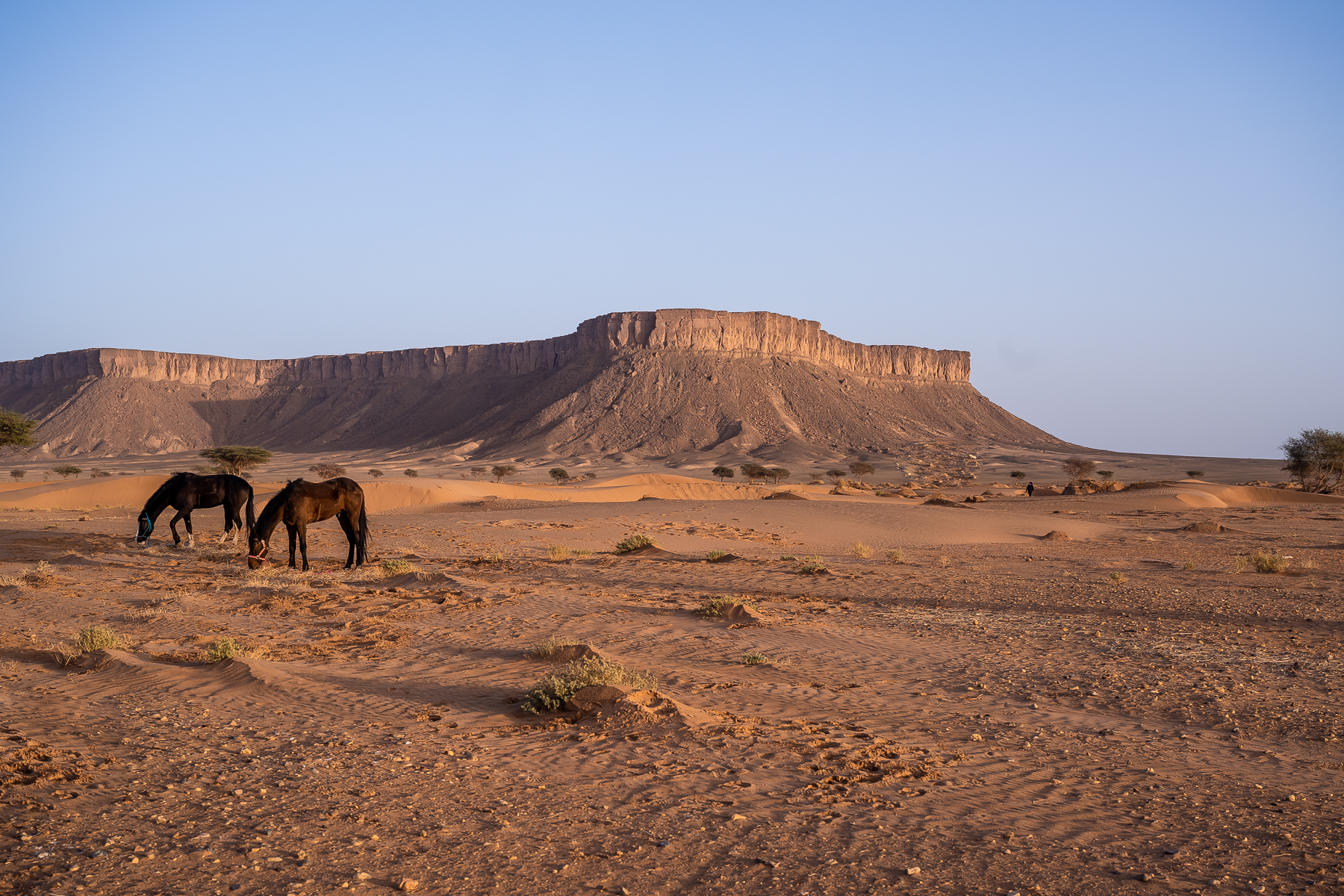
We camp at the foot of a mountain, among small dunes and acacia trees. Quiet, protected — a good first night in the desert rhythm.
Day 4 — Further south
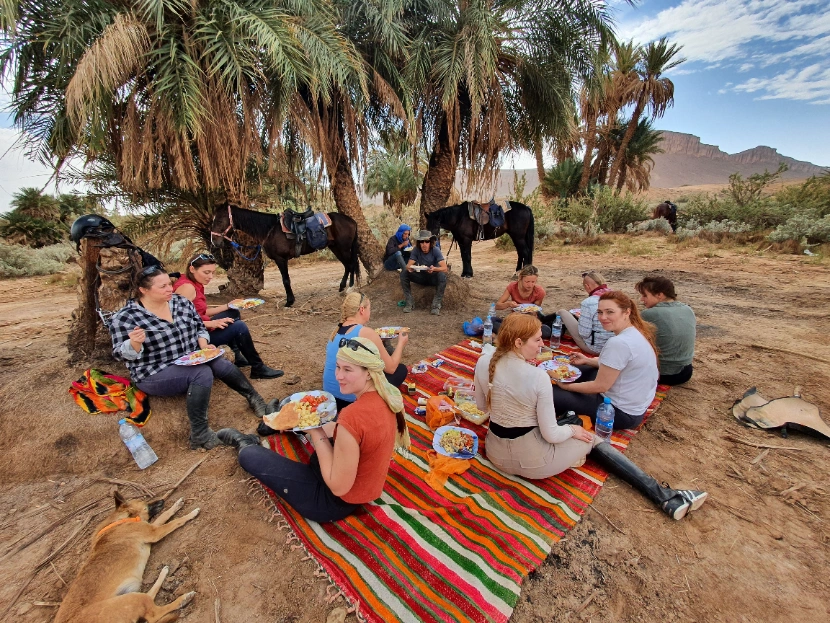
We keep heading south. Around 6 hours in the saddle, with a lunch break.
At first, the landscape is harsh, almost lunar — rock, emptiness, very little colour. Then it shifts. More life appears — grasses, acacias, something close to a desert savanna.
We cross the dry lake Iriki — a huge, pale, flat expanse. Most of the year it’s empty, but after rain it can turn into a mirror reflecting the sky.
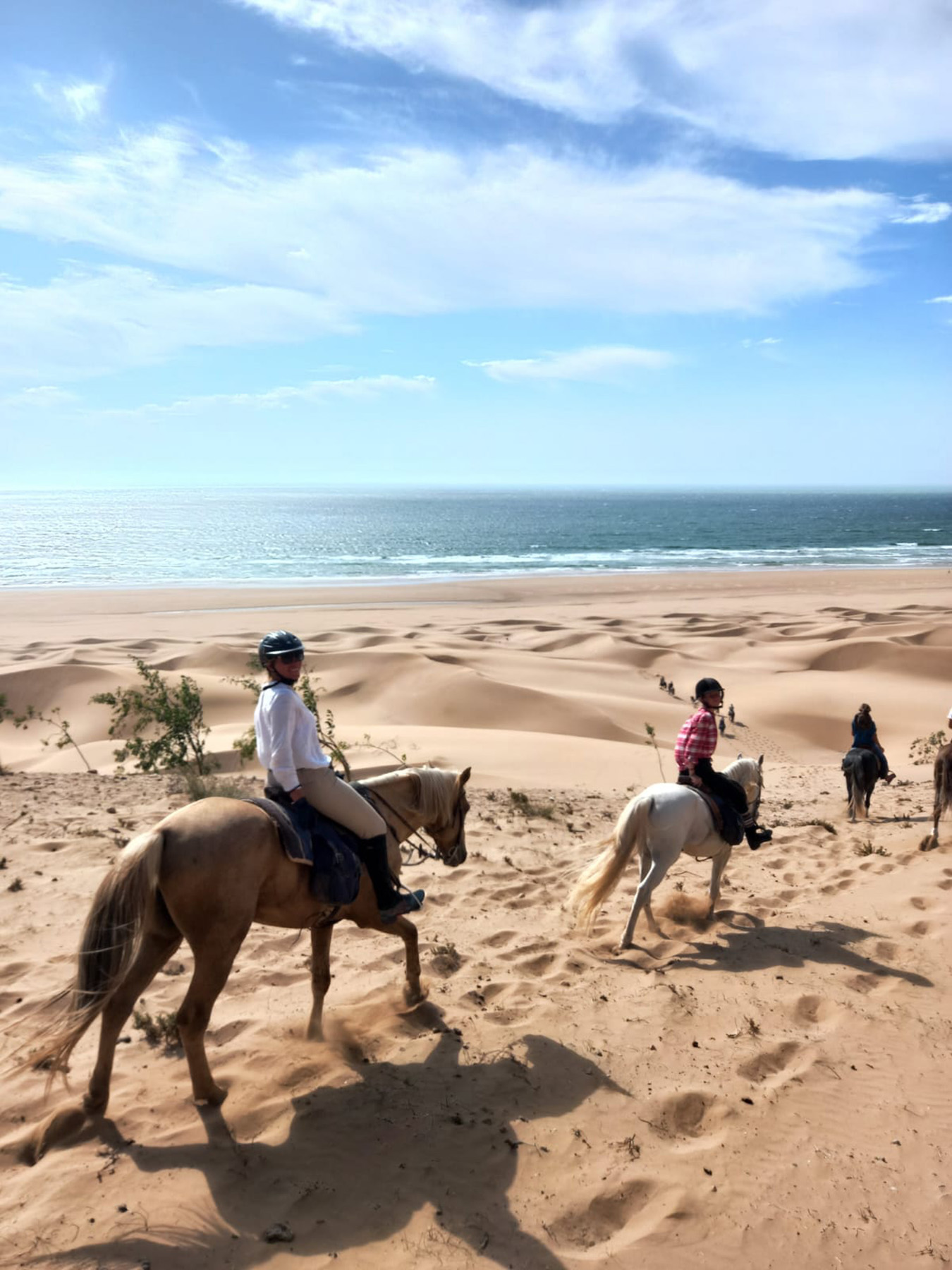
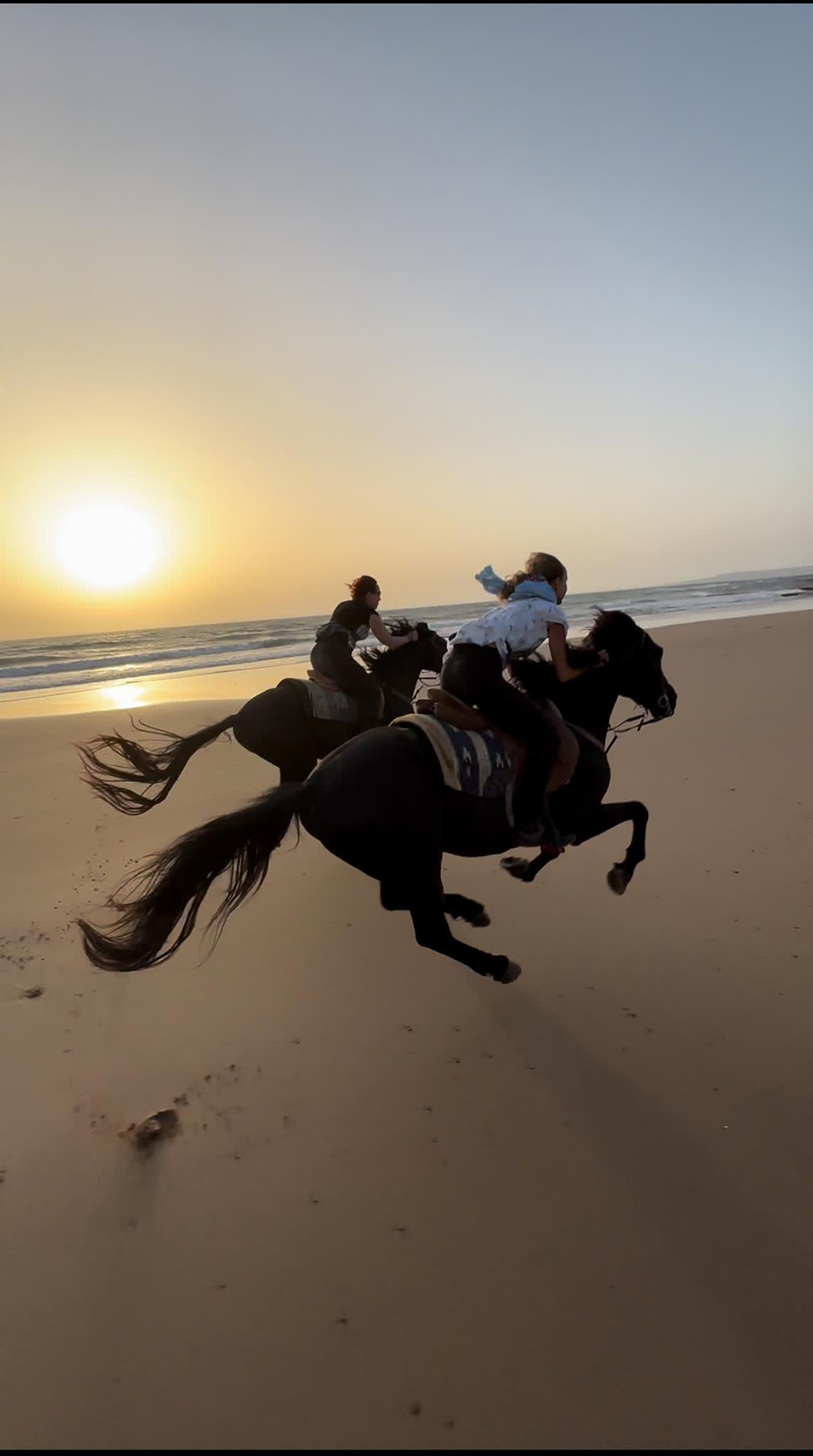
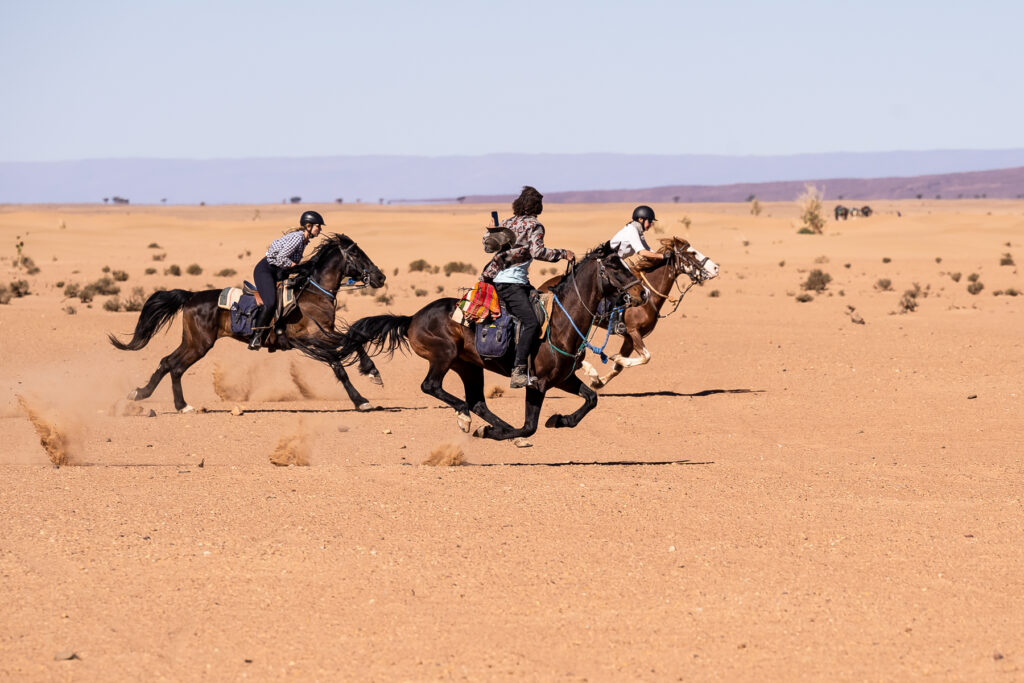
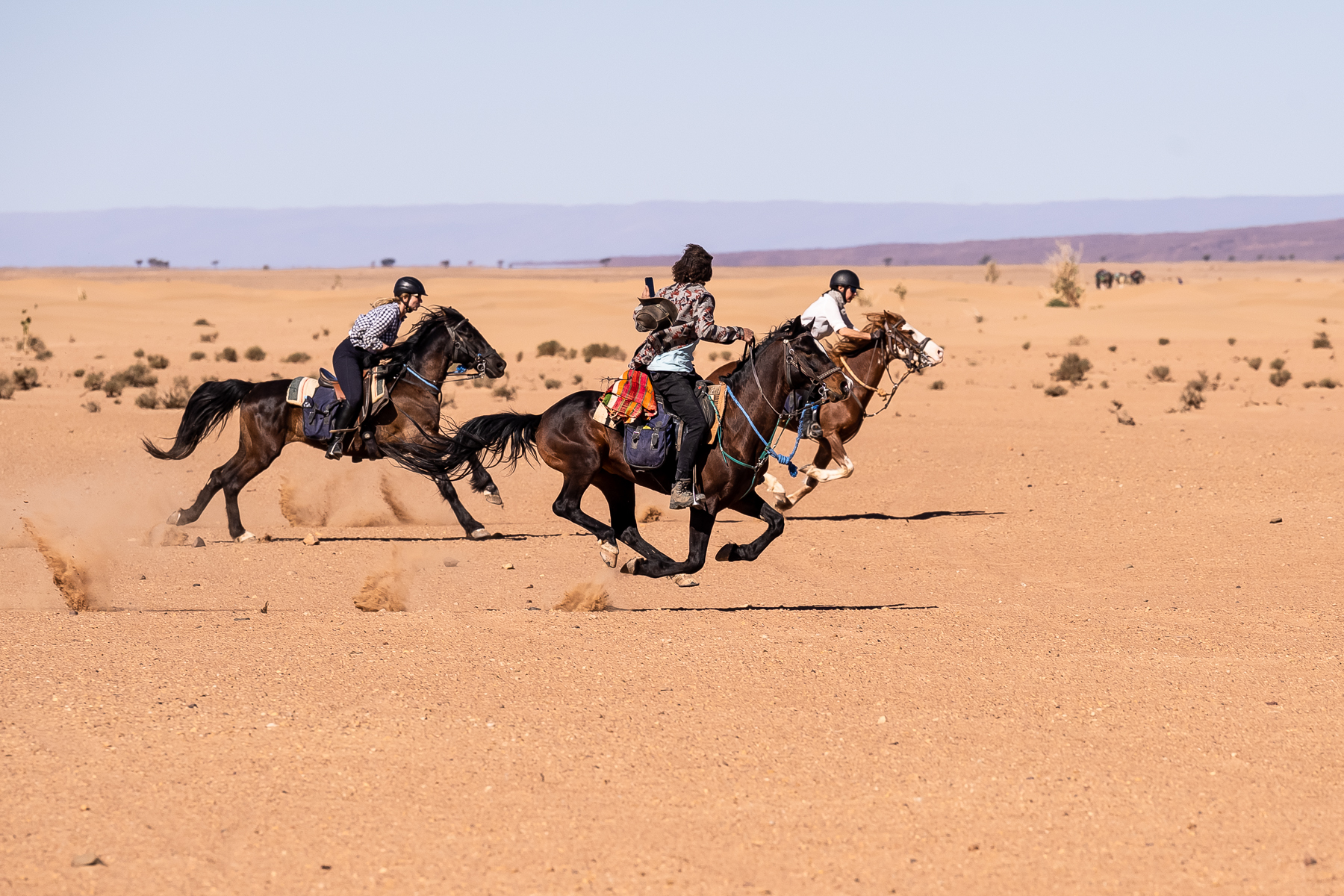
Endless space. Hard ground. Perfect for long gallops.
We camp near nomads, among acacia trees. If there’s been rain, everything changes — green patches, animals, even fields of wild chamomile.
Day 5 — Open space and the biggest dunes
We ride straight into open terrain. After a short warm-up, we move into long, free gallops.
This area can turn into a temporary lake after rain. It draws animals — if we’re lucky, we’ll see antelopes.
The landscape keeps shifting. Sometimes dry and raw, sometimes unexpectedly green, with flowers and the smell of wild herbs.
We pass through a “forest” of desert shrubs — calotropis. Tough, toxic, and one of the few plants that survives here.
Then the dunes begin. Bigger, softer, rising higher and higher.
We reach camp between massive dunes. Beds, showers — real comfort after days out.
Day 6 — A day among the dunes
No riding today. We stay in the dunes.
Morning camel ride — slow, quiet, without a goal. If you wake up early, you’ll see the desert come alive: light shifting, wind moving the sand, birds appearing.
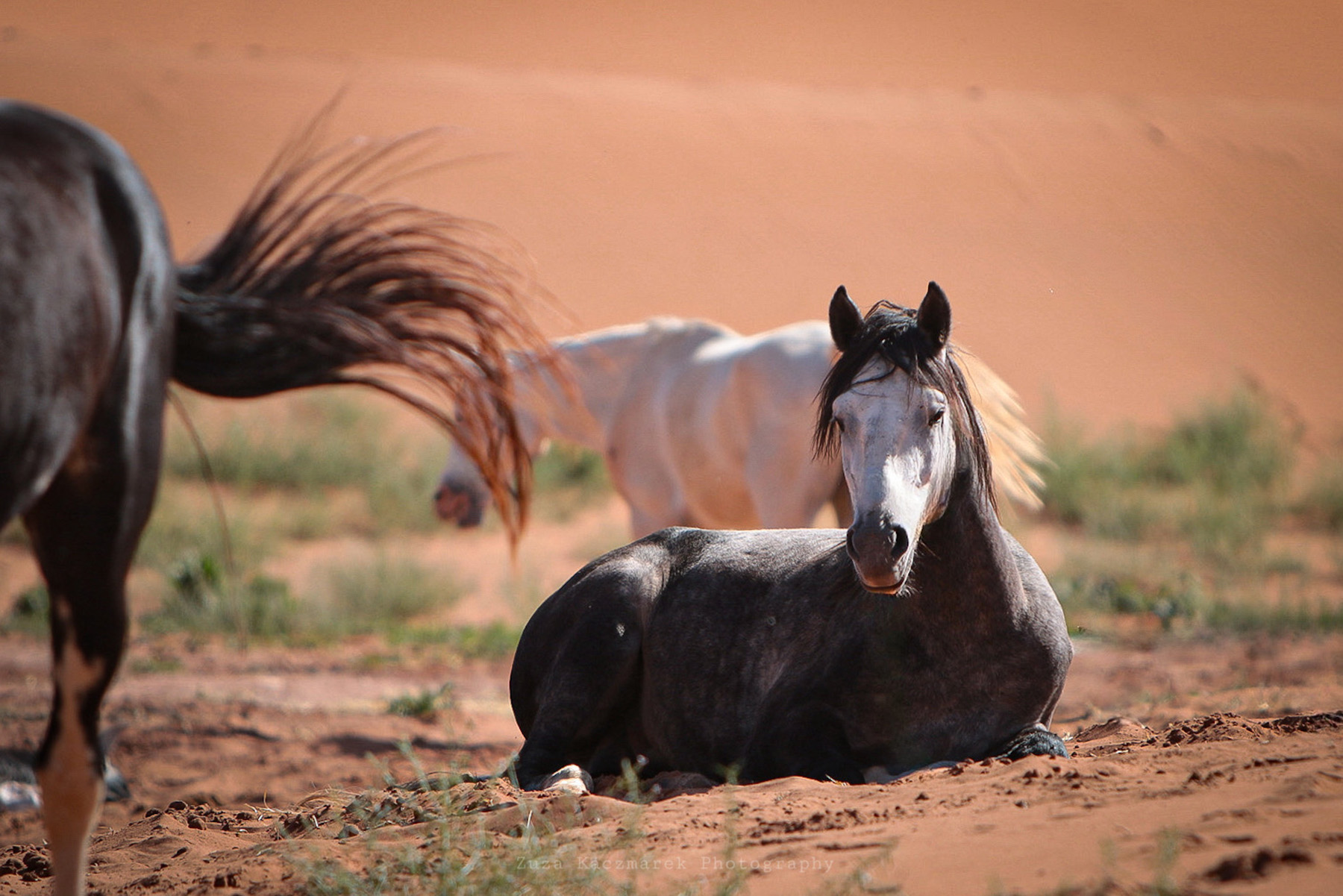
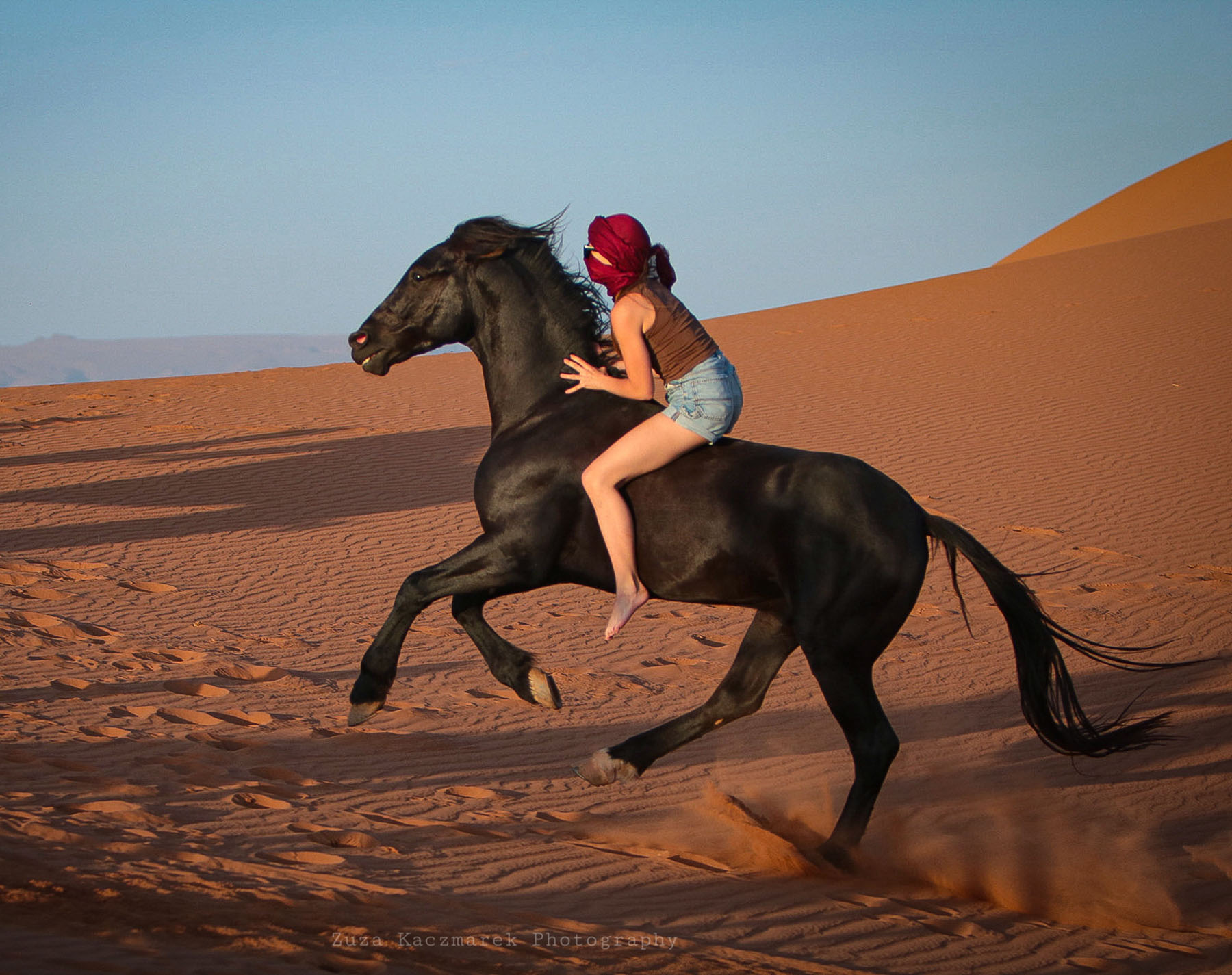
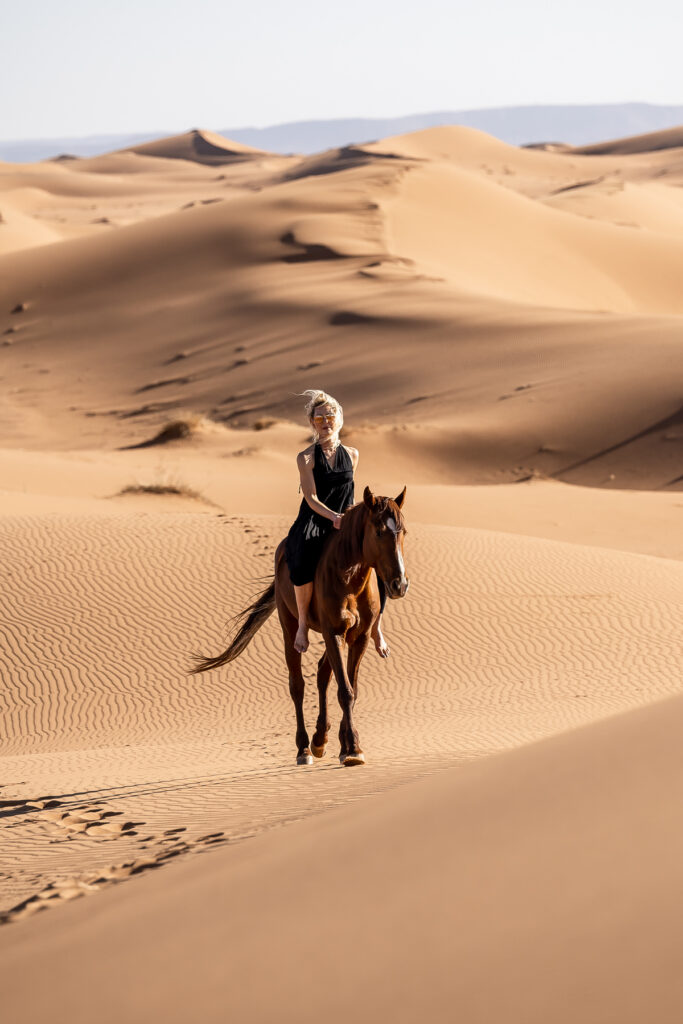
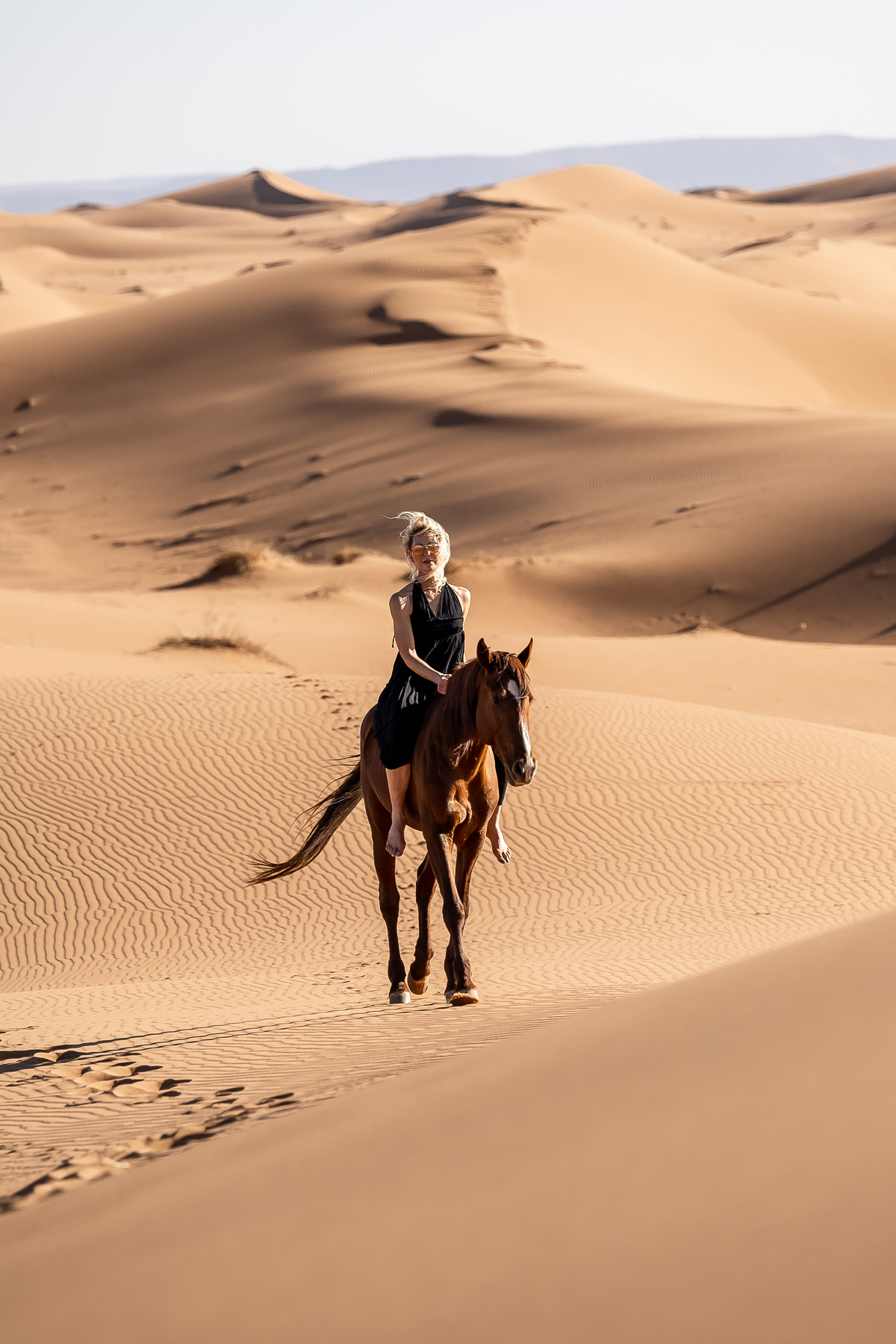
Afternoon with the horses — bareback, no tack, no pressure. Photos, time together, just being around them.
Optional sandboarding — and a lot of sand everywhere.
Another night in camp, with beds and hot water.
Day 7 — Back on horseback and moving on
We return to the horses and head out again.
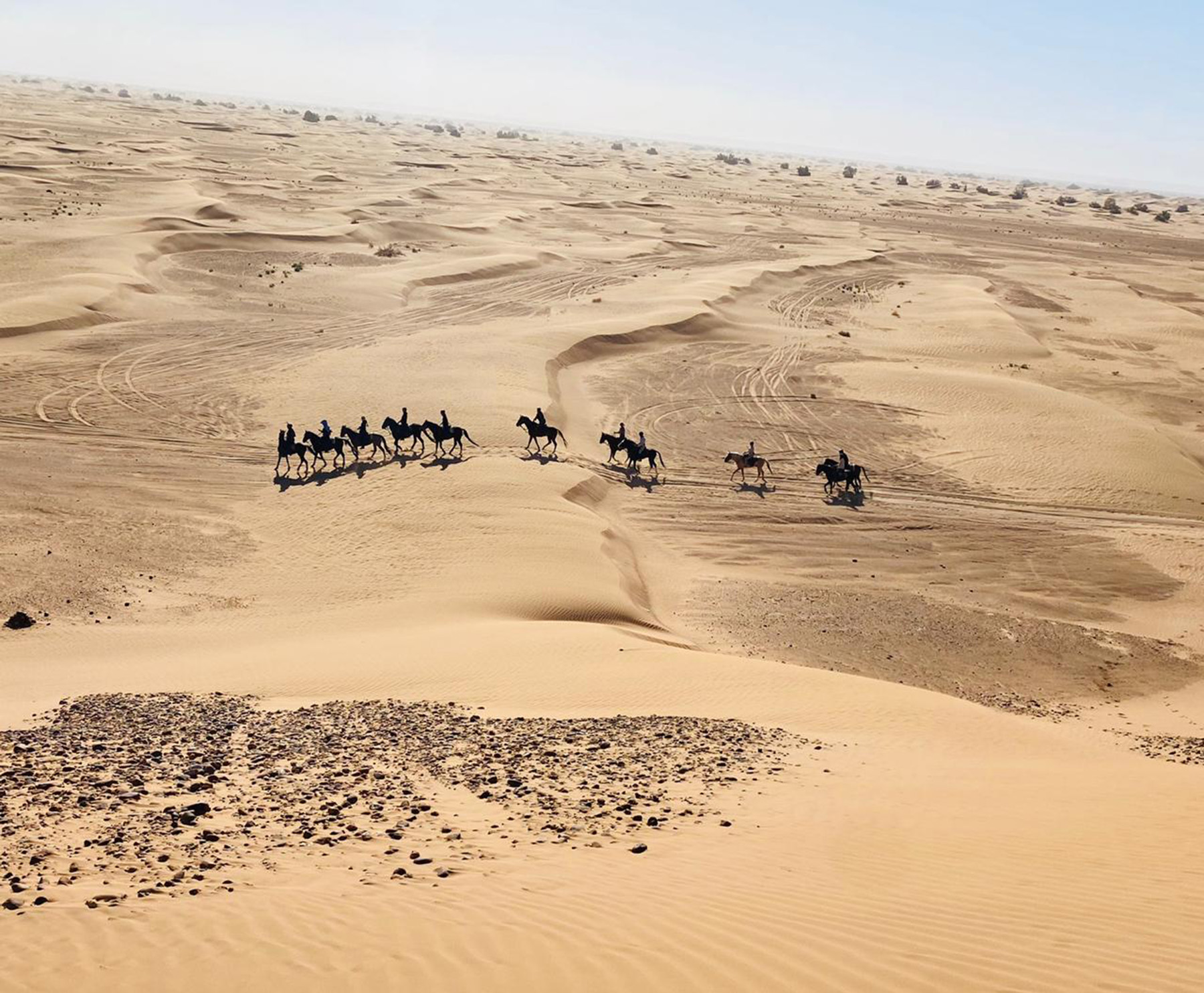
Dunes, open spaces, narrow sandy paths, patches of shrubs.
We might see camels — sometimes walking, sometimes running. If we’re lucky, they’ll run with us for a moment. Antelopes appear and disappear just as quickly.
Still a day with plenty of gallops, but the space starts to close in. The landscape becomes more intimate.
Camp near a dry riverbed, with mountains in the distance.
Day 8 — A different landscape
Another day under the desert sun.
We move through sand, surrounded by mountains marking the border with Algeria. The space feels different — more enclosed, more defined.
Camp is set in an ostrich reserve. The landscape shifts again — greener, closer to a savanna.
The ostriches come close. Curious, bold, not afraid. Sometimes they try to steal food from the horses.
At night, the place fills with movement — jerboas running through the dark, appearing and disappearing between the dunes.
Day 9 — Slowly heading back
A mix of everything now.
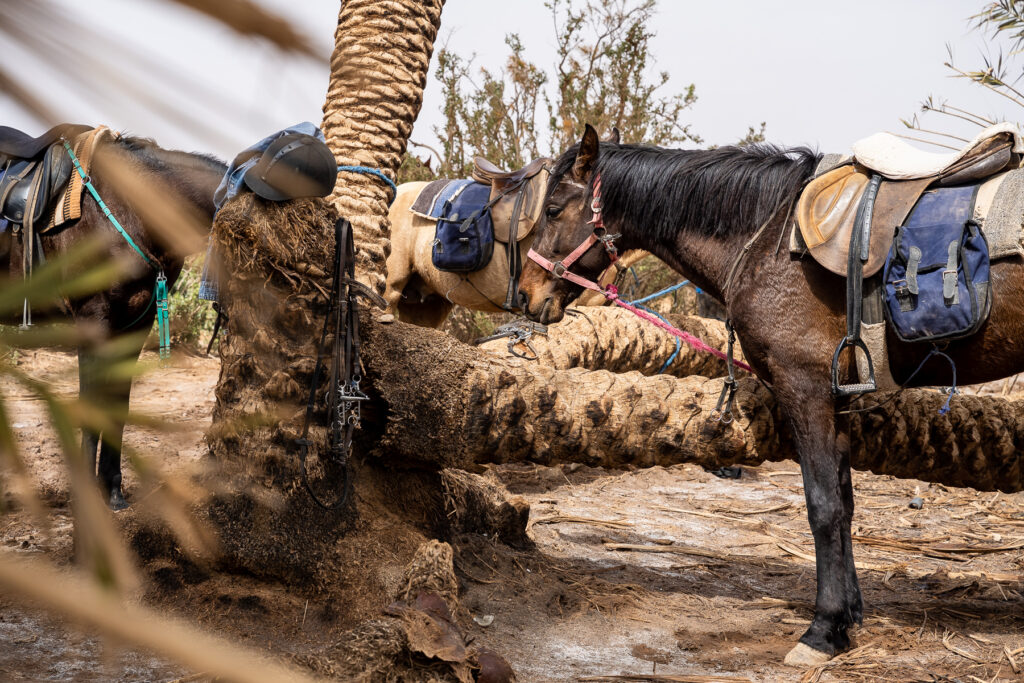
Hamada, shrubs, dunes. The landscape starts blending together. You feel the shift — closer to people, closer to roads.
Still riding, still in the open — but something is changing.
We stay in a local camp with clay houses. Real beds, a shower — after many nights outside, it feels different.
Day 10 — Goodbye to the desert
Morning — we say goodbye to the horses.
Then a long drive back.
We stop at Aït Ben Haddou — one of the best-preserved clay villages in Morocco. Narrow streets, tall kasbahs, a place that feels like a film set — because it often is.
We also pass by the film studios in Ouarzazate — “Moroccan Hollywood.”
In the evening, back to Marrakech. After the desert, the city feels completely different.
Day 11 — Return
Last morning in Marrakech.
A walk, coffee on a rooftop, quick shopping — or just a quiet moment before leaving.
Transfer to the airport and back home.
You leave the Sahara differently than you arrived.
Dust in your bag, sand in your pockets, and images that stay — long gallops, silence, fire, wind, horses, space.
End of the journey.
Interested in the ride?
Fill out the booking form.
What to bring
Basic first aid kit (painkillers, diarrhea medications, plasters, disinfectants)
Sunglasses
Sunscreen with SPF 50+
Sleeping bag – preferably with a comfort temperature around 0 C
Passport – valid for at least 3 months after your arrival in Morocco
Cash – euros are the easiest currency to exchange
Power bank – no electricity during parts of the trips
Headlamp – highly recommended
Clothes – warm layers for mornings, evenings and nights. Comfortable clothes that are easy to put on and take off while riding are best. A hat is also welcome on colder evenings
Rain jacket or waterproof layer
Cap or other sun protection for your head if you will not be riding with a helmet
Hand sanitising wipes